Showing posts with label Berbere. Show all posts

Friday, May 8, 2026

Awaze Wings

Ethiopia is well known for its spice blends, most notably berbere, a very spicy mix consisting of ground chiles, cardamom, fenugreek, ginger and other ingredients. The country is also known for its sauces, such as awaze.  It is this sauce that served as an inspiration for this post. 

I came across a recipe for an awaze sauce that could be used for barbecue ribs. The recipe was fairly simple, clarified butter, berbere spice mix, rosemary and ground cardamom. I decided to take this recipe, adapt it a little, and use it for a buffalo wing sauce. 

The first modification to the recipe was the berbere spice mix. You can probably find pre-made berbere in an Ethiopian market or at Penzey's. Alternatively, you can do what I do and make your own spice mix. I prepared my own berbere, using a recipe from Huntler, Angler, Gardener, Cook, which is a great resource from author Hank Shaw. 

True awaze uses clarified butter, which I have in my refrigerator; however, my second modification was to go a slightly different route. I decided to stick with Hank Shaw's recipe, which uses water or oil to create a berbere paste. I used oil and, given that choice, I decided to forego the clarified butter. I have enough "fat" being used in the wings with the oil, which I added a little more to make the paste into a rough marinade sauce.

Finally, I decided that I would grill the wings. This decision is based upon my growing preference for grilled wings, especially over fried ones and even roasted wings.  

Overall, these are perhaps the spiciest wings that I have prepared as part of my Wings Around the World project. I recognize that the preparation is not a true Ethiopian awaze, but I will make up for it in the future with a traditional awaze recipe, such as tibs. Until then ...

AWAZE WINGS

Recipe adapted from The Food Network; Berbere Recipe from Hunter Angler Gardener Cook

Serves 3-4

Ingredients:

  • 12 chicken wings (drummettes and flats)
  • Kosher salt
  • Freshly ground black pepper
  • 1 teaspoon whole black peppercorns
  • 12 cardamom pods
  • 2 large shallots minced
  • 6 cloves garlic, minced
  • 3 tablespoons vegetable oil or peanut oil
  • 2 tablespoons grated fresh ginger
  • 1 tablespoon salt
  • 2 tablespoons paprika
  • 3 tablespoons cayenne
  • 1 teaspoon turmeric
  • 1 teaspoon fenugreek
  • Water

Directions:

1. Prepare the rub. Toast all of the whole spices in a dry pan over medium heat until they are fragrant. Set aside. In the same pan, heat the oil and sweat the shallots and garlic over medium heat. Do not let them turn color. Turn off the heat and set aside. Grind the whole spices in a spice grinder and then mix with the powdered spices. Add the shallots and garlic to a food processor, then add the spices and drizzle in water or oil as you buzz it on low. 

2. Cook the chicken wings. Heat a grill on medium high heat. Rinse the chicken wings and pat them dry. Season with salt and pepper. Spread the paste on the wings so that they covered all over. Oil the grates of the grill and place the chicken wings on the grill. Grill for about seven minutes and then flip the wings, grilling them for about seven minutes more. Watch to make sure the rub does not burn, if it starts to blacken, move the wings to a cooler part of the grill and extend the cooking time. 

3. Finish the dish. Once the wings reach an internal temperature of 165 degrees Fahrenheit, remove them from the grill.  

PEACE.

Friday, July 13, 2012

Around the World in 80 Dishes: Eritrea

After having eaten a wonderful Bhutanese dinner of Kangchu Maroo, or Pig Trotter Curry, my thoughts turned to my next culinary challenge.  As I have previously noted, my challenges are almost always determined by using a random country generator websites on the Internet.  I consult the website and it provides a country like ... Eritrea.  I then do a lot of research.  My focus is three-fold: (1) to learn about the country, (2) its culture and (3) its cuisine.  While doing this research, I develop a theme for the blog post and the post itself begins to take shape.  I read websites like Wikipedia, the State Department, and/or other news sites, like BBC News.  I turn to more culture and/or culinary focused websites.  With respect to a country's cuisine, I try to learn about the ingredients and cooking processes that they use to make each dish.  While I read a lot of websites, I cannot incorporate it all into a blog post.  If I did, I would be writing a book.  So, a lot of editing has to take place.  When it is done, it looks like the following:

The history of Eritrea dates back to at least 1890.  At that time, Italian forces arrived on the Red Sea shores of Ethiopia, looking to establish colonies for Italy.  At the time, Ethiopia was an independent country; however, that did not stop Italy.  It created a colony that not only stripped Ethiopia of its access to the Red Sea, they also split a major ethnic group, the Tigray.  The colony was what would become Eritrea.  Over the months and years that followed, Italy's colonization reinforced the split between the Tigray Ethiopians and the Tigray Eritreans.  This split lead to the establishment of the Eritrean identity.  In 1935, the Italians invaded Ethiopia, but lost the war in 1941.  After the conclusion of World War II, in 1952, the United Nations created a federated Ethiopia, which included a separate government for Eritrea.  The Eritrean government was dissolved in 1962, when Ethiopia's Emperor, Haile Sellasie, annexed the region into Ethiopia.  The annexation sparked a thirty-year civil war.  That civil war ultimately led to the emergence of Eritrea as a country.

Despite this violent history, Eritrea shares a lot in common with Ethiopia when it comes to cuisine and food. The cuisines of both countries feature stews, with chicken, lamb and vegetables.  The stews are served with injera, a yeast-risen flatbread that has a spongy texture and a slightly sour taste.  There are differences.  Some are superficial, such as the names used for the dishes.  Ethiopians use the Amharic names, such as Doro Wat; Eritreans use the Tigrinya name, like Tsebhi Dorho.  Others are more substantial.  Eritreans then to use less seasoned butter and, which makes their dishes lighter than the Ethiopian counterparts.  Eritrean cuisine also includes influences from other cuisines.  The use of tomatoes in Eritrean cooking reflects the influence of Italy, while the use of cumin and curry powders highlights the influence of the Middle East.  

THE SIDE DISH

The first dish is D'Nish Zigni or Fiery Potato Stew.  This dish reflects both the influence of Italy and Ethiopia.  The Italian influence is reflected in the use of tomato paste to thicken the stew.  The Ethiopian influence is reflected in the use of Berbere spice mix to increase the heat of the dish.  The Berbere spice mix used in this dish is an Eritrean Berbere, as opposed to an Ethiopian Berbere.  D'Nish Zigni is served with injera.


D'NISH ZIGNI
Recipe adapted from Celtnet.uk.org
Serves 4

Ingredients:
2 tablespoons of vegetable oil
1 medium onion, chopped
4 teaspoons of Berbere (recipe below)
6 medium potatoes, cubed
1 small tin of tomato paste
1 tablespoon of salt
4 cups of chicken stock

Directions:
1.  Saute the onions.  Heat the vegetable oil over medium high heat.  Add the onions and saute for five minutes.

2.  Saute the potatoes.  Add the Berbere spice and potatoes and saute for five more minutes.  Add chicken stock and simmer for ten more minutes.  Add the tomato paste and stir to incorporate it.  Season and simmer for ten more minutes.  
Add the chicken stock and simmer for 10 minutes before adding the tomato paste, season to taste and simmer for a further 10 minutes.

Read more at Celtnet: http://www.celtnet.org.uk/recipes/miscellaneous/fetch-recipe.php?rid=misc-dnish-zigni
Copyright © celtnet

THE MAIN COURSE

Although I made D'Nish Zigni, it is not the dish that will qualify for the challenge. Instead, the culinary challenge for me is to make Tsebhi Sega.  This is a minced meat dish that is made with either ground beef or lamb.  Whenever I have the choice, I prefer lamb over beef.  This challenge had multiple components, requiring me to cook not only the meat, but also make an Eritrean Berbere spice mix as well as an herb butter known as Tegelese Tesmi.  I have included recipes for both the Berbere and Tegelese Tesmi with the recipe for Tsebhi Sega.  And, as with the D'Nish Zigni, the Tsebhi Sega is served with injera.


TSEBHI SEGA
Adapted from Celtnet.uk.org
Serves 4

Ingredients:
2 medium sized onions, chopped
2 tablespoons of sunflower or other vegetable oil
1 tablespoon of Eritrean Berbere
1 tablespoon of Tegelese Tesmi
1 teaspoon of chopped ginger
1 teaspoon of chopped garlic
6 large tomatoes, skinned and sliced
2 pounds of shredded or ground lamb or beef
Salt, to taste
Pepper, to taste

Directions:
1.  Saute the onions.  Heat the oil in a frying pan and saute the onions until they are light golden. 

2.  Add the other components.  Add the Berbere and Tegelese Tesmi, along with some water if necessary.  Continue to simmer on low for ten minutes.  Add the garlic and ginger, as will as the sliced tomatoes.  Season with salt and pepper after another five minutes.  Continue to simmer for about fifteen minutes. 

3.  Cook the meat.  Add the ground lamb or beef and continue to cook until the meat is done.  If the mixture becomes too dry, add a little water. 

To make the Tsebhi Sega, one must make an Eritrean version of Berbere.  And, just like Ethiopian Berbere, there are many different recipes, each with different spices and different proportions.  Ultimately, I had to settle on one recipe, but I still had to make some adjustments.  Most notably, the version I decided to use called for 20 crumbled dried peppers.  The problem is which dried red peppers to use.  I noted that some recipes call for a mix of piri-piri chiles and cayenne peppers.  Still 20 peppers is a lot.  After a lot of thought, I decided to use the proportions of ground red peppers (4 to 6 teaspoons) called for in the Ethiopian version.   


ERITREAN BERBERE
Adapted from Recipes Wiki
Serves 4

Ingredients:
4 to 6 teaspoons of dried red peppers or chilies (or 20 dried red peppers)
3 tablespoons of sweet or hot paprika
2 teaspoons of dried cumin seeds
1 teaspoon of cardamom
1/2 teaspoon of allspice
1 teaspoon of fenugreek seed
1 teaspoon of coriander seed
8 cloves
1 teaspoon of black peppercorns
1/2 teaspoon of dried ginger
1/2 teaspoon cinnamon
1 teaspoon of turmeric
1 teaspoon of salt

Directions:
Put all of the ingredients up to the salt in a frying pan (except for any powders).  Heat for two minutes, stirring constantly.  Add to a spice grinder.  Add the salt and any powders and grind everything.

Finally, to make Tsebhi Sega, it is also necessary to make Tegelese Tesmi or herb butter.  This is a relatively new process for me, because I have not had to clarify butter or make ghee in the past.  Of all of the components for this main dish, I actually had the hardest time when I made the Tegelese Tesmi.

TEGELESE TESMI (HERB BUTTER)
Adapted from Yummly

Ingredients:
1 cup of unsalted butter
3 1/3 ounces of water
2 small onions, shredded
2 cloves of garlic, crushed
2 teaspoons of ginger, shredded

Directions:
1.  Melt the butter.  Put the butter and water in a frying pan and heat them until the butter has melted.

2.  Simmer with the other ingredients.  Add the other ingredients and simmer the mixture on a low fire for thirty minutes, until the mixture stops skimming and the butter is clear.  Do NOT stir the mixture.

3.  Finish the butter.  Sieve the butter and allow to cool down in a well closed jam jar. 

*     *     *

Overall, I think this challenge is a success. I am completely stuffed, in part due to the D'Nish Zigni and Tsebhi Sega, and in part due to the injera.  One of these days I will make my own injera, rather than rely upon the bread I buy from a local Ethiopian store.  But, that would be an entirely different challenge.  Until that time ...

ENJOY!

For more about the history and cuisine of Eritrea, check out Konrad Licht and the Washington City Paper.

Monday, April 18, 2011

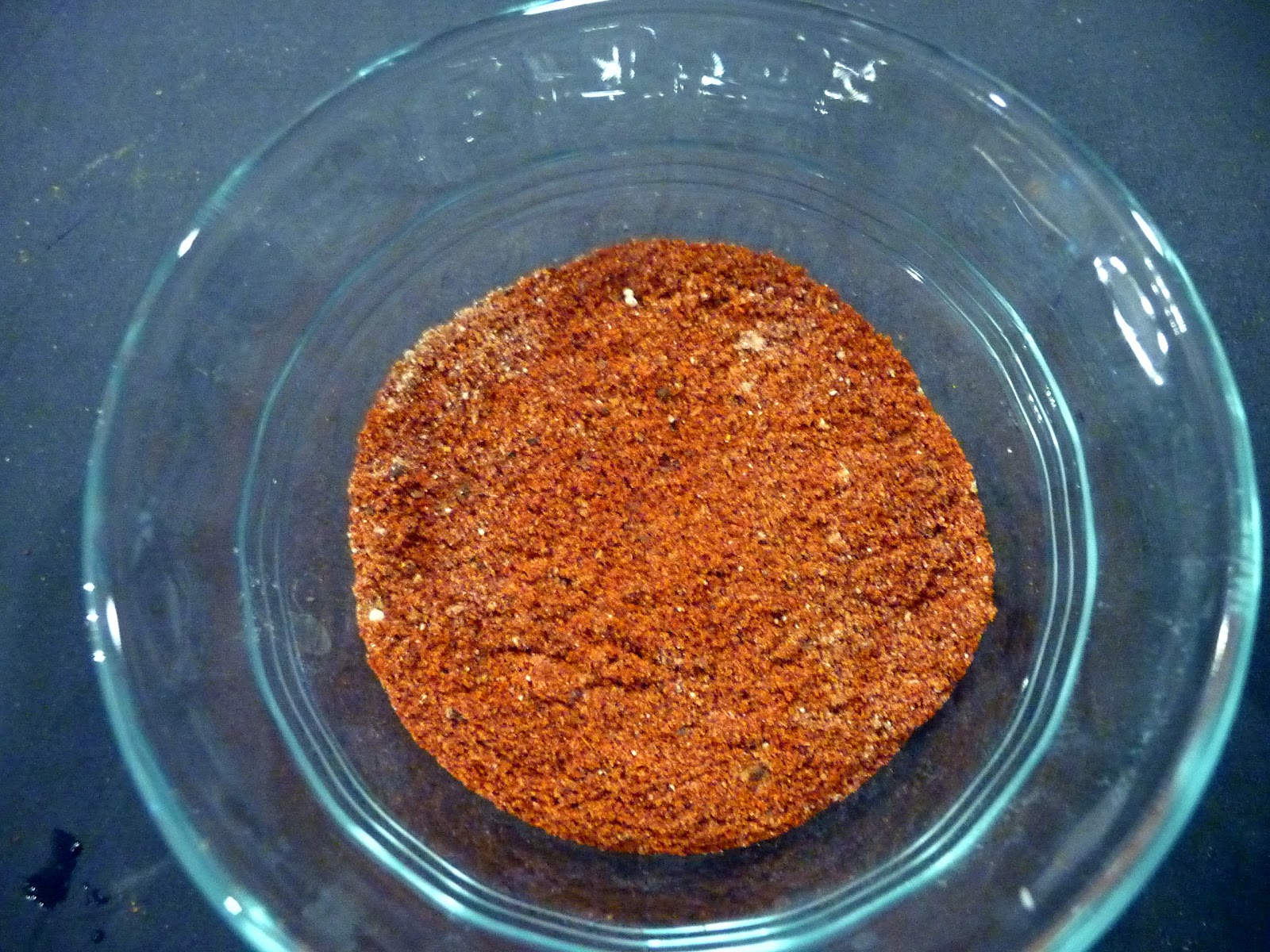
Ethiopian Berbere

Berbere is a spice mix used in Ethiopian cooking.  I first encountered Berbere when I started my personal culinary challenge, Around the World in 80 Dishes.  My first challenge was to cook Doro Wat, an Ethiopian chicken stew.  When I made the dish, I used a pre-made Berbere spice mix.  However, ever since that time, I have always wanted to make my own mix.  I have a lot of ideas for using the mix, from buffalo wings to barbecue.  However, I first needed to learn more about the spice mix and make some.  

As with most recipes, the ingredients and amounts used to make Berbere vary with the cook.  In other words, if you were to search Berbere recipes on the Internet, as I did, you are likely to find several recipes with different ingredients in different amounts.  The key to Berbere is the combination of fenugreek and chile powder.  When it comes to the chile powder, I used a combination of ground medium Hatch chiles (3 tablespoons) and native Nambe peppers (1 tablespoon).  If you do not have Hatch chile powder, you can use cayenne powder.  Generally, other ingredients commonly used in Berbere include allspice, cardamom, cloves, black pepper, turmeric and salt.  If you love spices as much as I do, you can also add cinnamon, coriander, cumin and/or nutmeg.    


ETHIOPIAN BERBERE
Adapted from the Congo Cookbook
Makes about 1/2 cup


Ingredients:
4 to 6 teaspoons of ground chile peppers
1 teaspoon of ground fenugreek
1 teaspoon ground ginger
3/4 teaspoon of ground cardamom
1/2 teaspoon of ground black pepper
1/4 teaspoon of ground turmeric
1/4 teaspoon of  ground allspice
1/8 teaspoon ground cloves
1 tablespoon of salt
1/2 teaspoon ground coriander (optional)
1/2 teaspoon ground cumin (optional)
1/4 teaspoon ground nutmeg
1/8 teaspoon of ground cinnamon (optional)

5 tbsp paprika 5 tbsp garlic powder 2 tbsp onion powder 2 tbsp sea salt 2 tbsp ground ginger 2 tsp ground cinnamon 1/2 tsp ground turmeric 2 tbsp whole cloves 1 tbsp cumin seeds 1 tbsp fenugreek seeds 2 tsp ground Ethiopian cardamom (or substitute ground black cardamom) 1 tsp black peppercorns 1 tsp dried thyme leaves

Read more at Celtnet: http://www.celtnet.org.uk/recipes/miscellaneous/fetch-recipe.php?rid=misc-eritrean-berbere-spice
Copyright © celtnetDire
Directions:
Combine all of the ingredients together and mix thoroughly. 

If you would like to make a wet spice mix, you substitute fresh ginger, along with 2 tablespoons of finely chopped onions, 1 tablespoon of minced garlic and 1/4 cup oil of oil, water or red wine.

ENJOY!

Wednesday, September 22, 2010

Around the World in 80 Dishes: Ethiopia

The Around the World in 80 Dishes is my own personal, culinary challenge to make 80 dishes from 80 different countries around the world.  After giving it some thought, I decided that there would be no better place to start my Jules Verne-esque adventures than the legendary cradle of humanity itself ... Ethiopia.  Some of the earliest human remains have been found in Ethiopia's valleys.  (Remember Lucy?  Her skeleton was discovered in the Awash Valley in Ethiopia's Afar Depression.)  Given I undertook this challenge to develop my cooking skills, by learning about ingredients and processes used to make these dishes, the country sometimes referred to as the "Land of Bread and Honey" is the ideal start for my own culinary evolution.

The most well known "bread" in Ethiopia is Injera, which is a sour-dough type of bread full of little air pockets, upon which the food is served.  Making good Injera takes a few days, as the batter has to ferment.  However, there are stores that sell the bread and I was fortunate enough to find a local Ethiopian store.  Using pre-made Injera allowed me to focus more on cooking the main dish.

Ethiopian cuisine is traditionally centered around thick stews, known as "wat," that are served on the Injera.  The wat begins with the sauteing of vegetables, most notably onions, followed by the addition a paste (usually garlic and ginger) and the berbere, which results in a very thick, spicy base.  After a couple of minutes, meat (like chicken -- which is "doro" in Amharic), fish or vegetables can be added, along with some water, resulting in the final wat.

THE MAIN DISH

I decided make a chicken wat or Doro Wat, which is also referred to as Spicy Chicken in Red Chili Sauce.  The recipe for Doro Wat comes from the World Cuisine Institute, Ltd., which sells packets of spices for various dishes, including a packet of pre-made Berbere, and includes the recipes for making each dish. The pre-measurement of the spices was helpful in making this dish for the first time.  I've tried to approximate the measurements for purposes of this recipe.


DORO WAT (SPICY CHICKEN IN RED CHILI SAUCE)
Serves 4 to 6

Ingredients:
2 pounds of chicken
1 tablespoon of lemon juice
4 cups of onion, finely diced
6 cloves of garlic, finely diced
2 tablespoons of ginger, peeled and minced
3 tablespoons plus 2 cups of hot water
1/4 cup of olive oil
1 tablespoon of butter
1/3 cup of Berbere chili spice (this can be adjusted to alter the spiciness of the dish)
1 tablespoon of nutmeg
1 tablespoon of ground ginger
1 tablespoon of paprika
1/2 tablespoon of fenugeek
4 Hard boiled eggs

For service:
Injera bread

Directions:

1.  Saute the onions.  Put the onions in a large saucepan and heat over medium-high heat.  Cook the onions for about 30 minutes, stirring frequently until they are translucent.

2.  Add the garlic and ginger.  Put the garlic and ginger into a food processor to make a paste.  Add the garlic/ginger paste, along with the olive oil, and butter to the onions and cook for another 15 minutes. 

3.  Add the spices.  Stir in the Berbere powder/paste, nutmeg, ginger powder, paprika and fenugeek, along with 1/2 cup of water.  Cook for about five minutes.

4.  Make the stew.  Add the chicken and the rest of the water to the pan.  Bring to a boil and then reduce the heat, allowing the chicken to cook until it is tender.  The chicken should cook about 20 minutes.

5.  Add the eggs.  Peel the hard boiled eggs and pierce them gently with a knife in 3 places.  Carefully add the eggs and cover them with the sauce.  Continue to cook for 5 minutes.

6.  Plate the dish.  To serve, ladle or place a piece of chicken and an egg on the tray.  Also make sure that you ladle some of the sauce over the chicken.  Tear a piece of Injera using your right hand and use it to pick up pieces of the chicken or egg.  Always use your right hand!

THE SIDE DISH

I decided to make a side dish and beverage to accompany the Doro Wat.   Vegetarian dishes figure prominently in Ethiopian cuisine.   I found a recipe for Yataklete Kilkil.  This is an interesting dish, with vegetables cooked in oil with garlic and ginger.  I forgot to add the green beans (which is okay because I am not a big fan of green beans).  Although the vegetables are cooked, they still remain crisp and only a little tender.  


YATAKLETE KILKIL (VEGETABLES WITH GARLIC AND GINGER)
Serves 4 to 6

Ingredients:

6 small red potatoes, scrubbed and quartered
3 large carrots, peeled and cut into pieces
1/2 pound of green beans
1/4 cup olive oil
1 green pepper, diced
2 onions, diced
3 cloves garlic, diced
2 jalapenos, stemmed and seeded (if you want more heat, leave in the seeds)
1 teaspoon white pepper
Salt, to taste
6 scallions, cut into pieces.

Directions:

1.  Boil the potatoes.  Bring a pot of water to boil.  Add the potatoes and cook until tender, about 8 minutes.  Drain and set aside.

2.  Saute onions and peppers.  In another pot, heat the oil on medium-high heat.  Add the onions, green peppers and jalapenos.  Cook for five minutes.

3.  Add spices.  Add garlic and ginger, as well as the salt and white pepper.  Cook for 1 minute.

4.  Saute the vegetables.  Add the rest of the vegetables (carrots and green beans).  Stir to cover all vegetables with the oil.  Add the scallions.  Cook on low for 8 to ten minutes.

THE BEVERAGE

For a beverage, I decided to make something that seems to be just as Ethiopian as Doro Wat ... Tej or Ethiopian Honey Wine.  Generally, Tej (pronounced "T'edge") is traditionally made through fermentation.  A little impatient, I found an easy recipe for making Tej, with just three ingredients -- white wine, water and honey.  The recipe I used called for 2 cups of white wine and 2 cups of water, but there was a lot of feedback about how the drink was "watered down."  So, I cut the water in half, making the Tej with two cups of white wine and one cup of water.  The result is very good and complements the spicy Doro Wat.

TEJ (ETHIOPIAN HONEY WINE)
Serves 4 to 6

Ingredients:
2 cups of white wine (Riesling, Soave, or Pinot Grigio)
1 cup of water
1/4 cup of honey

Directions:
1. Combine the white wine and water.

2. Combine the honey, stirring or whisking to blend the honey with the wine and water.

3. Chill and serve.

*     *     *

In the end, I really enjoyed the Doro Wat, partly because I love spicy food and also because the dish provided a different type of spiciness that I have not really experienced before.  I also enjoyed the Tej, whose sweetness is able to tame the Wat's kick.  As for the Yataklete Kilkil, it was good, but I think it is outshined by the other dishes.  While one day of cooking does not make me an expert in Ethiopian food, it has opened a new window in terms of new ingredients, processes and foods (and a beverage). 

I hope you have enjoyed the little tidbits about Ethiopian cuisine and these dishes as much as I enjoyed making them.  Now, I have to begin planning my next culinary destination.  Till next time ....

ENJOY!

For more information about Ethiopian cuisine, you can check out some of the web sites I visited in preparing this blogpost: Abesha Buna Bet, Recipes Wiki or Wikipedia.