Showing posts with label Red Onions. Show all posts

Tuesday, September 1, 2026

Dhal Bhat

"Dhal bhat power, 24 hours."
-- Nepali saying

Many cuisines are readily identifiable by one dish. For example, jollof rice would be cited for the cuisines of Ghana or Nigeria. Sushi could be identified for the cuisine of Japan, while pho could be identified for the cuisine of Vietnam. And, if one had to choose which dish could be representative of Nepali cuisine, that dish would be dhal bhat. 

The name translates literally into lentil soup and rice, which is a very good description of the dish. Yellow or red lentils are prepared with a variety of spices, like mustard, turmeric, coriander and cumin, to prepare a stew that is served alongside or with rice.

Yet, to Nepalis, dhal bhat is not just a dish or even a meal. It is a story as old as the people themselves. Nepali farmers have been cultivating both lentils and rice for centuries. Nepali cooks have take those two building blocks to prepare a dish that became the source of fuel or energy for farmers when they went back into the field. Hence the phrase, "dhal bhat power, 24 hours." Between 400 C.E. and 750 C.E., dhal bhat became more popular generally as both Buddhism and Hinduism, with their emphasis on vegetarian dishes, spread among the Nepali people. As time went on, especially during the thirteenth through eighteenth centuries,  dhal bhat went from representing fuel for farmers to a dish that meant hospitality and community. It was something that not only energized farmers in the fields, but also something that brought families together. Even today, when someone serves dhal bhat, it is a sign of regard and respect of the host toward guests. 

There are regional variations of dhal bhat within Nepal. If one travels the terai, which are the lowlands of western Nepal, they would most likely find a thinner dhal bhat prepared with mustard oil and chiles, making a spicer dish. If they headed into the Himalayan mountains, they would be served a thicker stew, with barley or millet serving as a substitute for the rice. 

I found a recipe for a dhal bhat prepared in connection with the Tibetan Nuns' Project, a charity that supports and educates nuns living in India. The dish caught my attention as part of my own Mindfulness Foodways, where I have been exploring healthier foods to prepare. A dish that could naturally provide power for twenty-four hours is far more preferable than western-style supplements. Although the source describes this dhal bhat as "Tibetan-style," it is very similar to the dishes prepared by Nepalis, whether in the Himalayas or the terai.

This dish challenged me in a few ways, but all of them are good. I have eaten lentil dishes in the past, but they are not a regular part of my culinary repetoire. This dish provided a compelling reason why they should be. Quite frankly, I should be preparing a huge pot of this at the beginning of the week and making a small bowl of this part of my breakfast for the day. That definitely provides me with something to think about. Until then ....

DHAL BHAT

Recipe from the Tibetan Nuns Project

Serves 4

Ingredients:

  • 1 cup red lentils
  • 1 tablespoon vegetable oil
  • 1 small red onion, chopped in small dice
  • 2 cloves garlic, minced
  • 1 tablespoon ginger minced
  • 3/4 teaspoon salt
  • 1/2 teaspoon mustard seed
  • 1/2 teaspoon tumeric
  • 1/2 teaspoon cumin seeds
  • 1/2 teaspoon coriander powder
  • 1 medium tomato, diced
  • 1/2 tablespoon butter or ghee
  • 2 tablespoons cilantro and/or green onion, chopped. for garnish
  • Water
  • Basmati rice
  • Indian chutney or pickle (achar) as accompaniment

Directions:

1. Prepare the lentils. Wash the lentils and rinse a couple of time. Be careful to remove any stones. If you have the time, soak the lentils in water as long as you can, up to overnight, before you cook. They can get very soft and can cook faster.

2. Prepare the rice. Prepare the rice according to its instructions. 

3. Prepare the base. Heat the oil in a pan for a minute or two. Add the ginger, garlic and onion and stir fry on high until the onion is a little brown on the edges, about a minute or two. Stir in the cumin seeds, salt, turmeric, mustard seed and coriander powder, turn down the heat to medium and cook for two minutes (stirring often). Add the tomatoes and butter. Stir and cover with the lid and cook for four minutes. 

4. Continue cooking the lentils. Stir in the lentils, cover and cook for 5 minutes. Add one cup of water, cover the lid and cook for 5 more minutes. Stir in 2 more cups of water, as the water will begin to decrease as you cook. Continue to cook on medium heat for 10 minutes. 

5. Finish the dish. Remove from the heat, garnish with the cilantro and/or green onions. Serve immediately with rice. 

PEACE.

Friday, April 24, 2026

Haitian Style Spicy Grilled Octopus

Octopuses can be found around the Caribbean Sea; and, as one could expect, they make their way onto the plates in restaurants and homes from Jamaica to Dominica. I recently decided to make a Caribbean-inspired octopus recipe. As I searched for a recipe to make, I came across a recipe from a Haitian blogger, food photographer and recipe developer, Annick Megie. The recipe looked like it was something I could make and the dish looked beautiful (Megie is, after all, a food photographer). 

The recipe was even simpler for me because I had purchased pre-cooked octopus. I have worked with raw octopus, and, I have a place where I could easily buy one, but the cooked version was what I had on hand when I was looking to make the recipe. If you have a pre-cooked octopus, you can skip to step 3 in the recipe below. If you don't, then you should follow steps 1 and 2 (especially the dipping the octopus first before you completely submerge it). 

In terms of white wines to use to cook the octopus, think of something that you could pair with the dish when it is ready to eat. Some easier to find wines might be an Albarino from Galicia, Spain; or a Vinho Verde from Portugal. If you are able to search a little more, perhaps a Vermentino from Sardinia, Spain; or a PicPoul de Pinet from Langudoc, France. Basically, you want a lighter, more mineral wine. The opposite of an oaked Chardonnay. (An unoaked Chardonnay would work well.)

As I researched the use of octopus in Haitian cuisine, I read an article (which I am now unable to find again), about how fishermen in the northern coastal cities (most likely Cap-Haitien, but I would like to think it included smaller cities like Labadee or Basse-Terre) would bring back octopus as part of their daily catch.  However, while most of those in the Haitian boat-fishing is done by men, there are women who catch octopus and turtles. That enables women to go beyond their traditional roles in the fishing industry, which focuses more on the processing and selling of the catch. 

Although it is not Haitian, this link will take you to a videostory, Felicia: The Life of an Octopus Fisherwoman, which tells the story of an octopus fisherwoman in Madagascar. While the film tells the story of a fisherwoman half-way around the world, there are commonalities in the life-experiences. Madagascar is one of the poorest countries in Africa, just as Haiti is the poorest country in North America and the Caribbean. Large populations live at or below the poverty line, doing the best to survive on a daily basis. They compete for resources, not just with each other, but with outsiders - like large fishing fleets - that often win the battle. The result is overfishing and environmental degradation, leaving less for the local fishermen and women to feed their families or sell at the market. The experience of Felicia may very well be the experience of women living in poverty along the coastlines of Haiti, or many other places around the world. 

A reminder that, behind a pretty plate of grilled octopus, there are people struggling just to survive. It is struggle shared by the poor around the world, from Haiti to Madagascar, from the United States to Australia.

HAITIAN STYLE SPICY GRILLED OCTOPUS

Recipe from Tchakayiti

Serves 4

Ingredients (for the broth):

  • 1 medium-sized ctopus, previously cleaned
  • 1 cup of white wine
  • 2-3 cups of water, enough to submerge the octopus
  • 3 bay leaves
  • 3-5 garlic heads
  • 1 teaspoon cayenne
  • 1 teaspoon chile powder
  • 1 teaspoon paprika
  • 1 teaspoon salt
  • 1 teaspoon pepper

Ingredients (for the sauce):

  • 5 shallots chopped
  • 1/2 red onion, chopped
  • 1 piment bouc (or scotch bonnet) chopped
  • 3 limes, juiced
  • Olive oil
  • Fresh parsley

Directions:

1. Prepare the octopus.  In a pot, combine all of the broth ingredients. Make sure to add enough water to cover the octopus. Bring all the ingredients to a boil. Let simmer for about 10 minutes for the flavors to be infused. Dip the octopus in the water 2 or 3 times for about 10 seconds each time. This helps the tentacles curl up. Submerge the octopus completely in the broth. 

2. Cook the octopus.  Cook for about 45 minutes to 1 hour, until the octopus is tender. Be careful not to overcook it for that can have the reverse effect and make your octopus chewy. Take the octopus out of the water and cut it into small pieces. 

3. Make the sauce. In a bowl, combine the spicy sauce ingredients. Drizzle the sauce atop the cut octopus. 

4. Marinate the octopus.  Cover and let marinate in the fridge for a few hours.  

5. Finish the dish.  Fire up the grill. Grill the octopus for about 5 to 10 minutes for each side or until it is crispy on the outside. Serve immediately. 

PEACE.

Saturday, October 4, 2025

Around the World in 80 Dishes: South Africa

I have gotten to where I am in life not because of something I brought to the world but through something I found - the wealth of African culture. 

-- Hugh Masakela 

When reading these words, they sound like the notes emanating from the trump of the famous South African jazz musician. "The Father of South African jazz, Masakela was known for his anti-apartheid songs, such as Soweto Blues and Bring Him Back Home." His music encouraged and inspired South Africans in their struggle to end the racist system of apartheid. That struggle eventually prevailed on May 4, 1990, when an agreement was reached to establish a democratic government -- of all the people and by all of the people -- by 1994. And, in that year, South Africa held its first fully democratic election, in which the Rainbow Nation (a term originated with Archbishop Desmond Tutu) elected Nelson Mandela as its first black President.

South Africa has always interested me, as it represents one of the best examples of how a diverse people can tear down a racist system and replace it with one based on equality and freedom. To be sure, South Africa has its issues, particularly economic issues which have perpetuated and, in some respects, worsened the economic divides amongst its people. But, there is a wealth of South African culture, one that transcends dollars and cents, or Rands. One that is truly invaluable.

My Around the World in 80 Dishes challenge invites me to learn more about this wealth. The Rainbow Nation, South Africa, is truly a diverse one, as evidenced by the fact that it has eleven official languages (Afrikaans, English, Ndebele, Sepedi, Sesotho, Setswana, siSwati, Tshivenda, Xhosa, Xitsonga and Zulu). This diversity presents a lot of potential dishes for a main course. There are, of course, many dishes from the various African nations who live in South Africa, along with dishes from other significant ethnic groups, such as curry dishes from India and Malaysia, who were brought or made their way during the colonial period. And, there are, of course, the dishes of the colonizers themselves, such as the English and the Afrikaans. There are so many options that it took a very long time to decide. And, in the end, the decision was made not by myself but, interestingly enough, by Chef Gordon Ramsay. 

While I was preparing a meal one afternoon, I happened to have Gordon Ramsay: Uncharted on the television in the background. The show chronicles Chef Ramsay's travels to various parts of the world, where he spends a week learning about the people, their culture, and their food, all tied together by a challenge to prepare a meal at the end. This particular episode followed Chef Ramsay as he learned about South African cuisine in the KwaZulu-Natal province, with a particular emphasis on the Zulu cuisine, but a recognition of other influences. He prepared a whole fish on the braai, learned how to make Ushatini and Chakalaka, and discovered the importance of pelepele or piri piri. 

Ramsay's adventures provided a roadmap for this particular challenge. I am going to make the principal dishes from that Uncharted show: whole fish on the Braai, which will satisfy the challenge, along with the sides of ushatini and chakalaka. I will even make pelepele (or peri peri).   

MAIN DISH

For the culinary challenge, I prepared a whole fish for the braai. Gordon Ramsay's preparation of this dish was very simple, basically just some salt on the fish before placing it on the grill. My recipe involves a little more preparation and ingredients. 

WHOLE FISH ON THE BRAAI

Recipe from Fish Wife

Serves 2

Ingredients:

  • 1 whole fish (such as Red Roman, red snapper)
  • 1 red onion
  • 1 handful of cilantro
  • 2 teaspoon minced garlic
  • 1 teaspoon minced chiles
  • 2 teaspoons grated ginger
  • 1/2 cup soy sauce
  • 1 lemon

Directions:

1. Prepare the fish. Score both sides of the fish.  Chop the red onion and the cilantro and stuff into the cavity of the fish. Grate some lemon rind and add to the cavity. Mix together the garlic, chiles, ginger and soy sauce. Spread one-half of the sauce over both sides of the fish. Keep the remaining half for basting the fish. Place the fish on a fish basket that can be flipped.

2. Grill the fish. Heat a charcoal or gas grill over high heat. Cook the fish over the heat for 20 to 25 minutes, flipping over 3 to 5 minutes. Using a basting brush, paint the fish with the marinade with every flip. When the fish is done, remove from the heat and allow to rest for a few minutes. 

SIDE DISH

Chakalaka is a South African side dish that is often served with the braai. Its origins lie in the townships around Johnannesberg, where Mozambican mineworkers lived and worked. These mineworkers would combine tinned food, like beans and tomatoes, with chiles to create a dish that they could eat with pap (porridge). Chakalaka represents an effort to take something that was brought to the region by colonialists (tinned food) and making it into something indigenous. 

CHAKALAKA

Recipe from Cooking Channel

Serves 4

Ingredients:

  • 3 tablespoons oil
  • 1 onion, finely chopped
  • 2 green Thai Bird's eye chiles, seeded and chopped
  • 2 garlic cloves, crushed
  • 2 ounces ginger, finely grated
  • 2 tablespoons mild curry powder
  • 1 green bell pepper, finely chopped
  • 1 yellow bell pepper, finely chopped
  • 1 red bell pepper, finely chopped
  • 5 large carrots, scrubbed, topped, tailed and grated
  • 14 ounces canned chopped tomatoes
  • 12 ounces tomato paste
  • 14 ounces canned baked beans
  • 2 sprigs fresh thyme
  • Salt
  • Freshly ground black pepper 

Directions:

1. Saute ingredients. Heat the oil in a pan and fry the onions until soft and translucent. Add the chiles, garlic and half of the ginger (reserve the other half to add right at the end). Add the curry powder and stir to combine. Add the bell peppers and cook for another two minutes. Add the carrots and stir to make sure they are well combined with the other ingredients and coated in the curry powder. Add in the tomatoes and tomato paste and stir. Cook until the mixture is well combined and slightly thickened, about 5 to 10 minutes. 

2. Finish the dish. Remove from the heat and add the baked beans, thyme and remaining ginger. Stir to combine; season with salt and pepper. Serve hot or cold. 

RELISH

Ushatini is a South African version of a salad or relish that I have seen around the world. In the Americas, it resembles salsa or pico de gallo, with tomatoes, onions and chiles. In the Middle East, it is halfway to a salad e-shirazi (all it needs is cucumbers). Yet, ushatini is South African with its use of the piri-piri chiles (or, in my case, Thai green chiles). It is a great accompaniment to the Braai, as it should be spooned over the grilled meat or seafood.  

USHATINI

Recipe from Cookpad

Ingredients:

  • 1 red onion, diced
  • 2 big tomatoes, diced
  • 3 chiles, minced
  • Vinegar, to taste
  • Salt, to taste 

Directions:

Combine all of the ingredients in a bowl and mix well. 

CONDIMENT

The final part of the Around the World in 80 Dishes challenge involves the preparation of peri-peri sauce, or what was referred to in Uncharted as "pele pele" sauce. This condiment was made possible by the Portuguese, who brought chiles to South Africa (as they did around the world), which served as the basis for the sauce. This is a very spicy sauce given the types of chiles used. 

SOUTH AFRICAN PERI PERI

Recipe from African Bites

Ingredients:

  • 10 hot chiles (habanero, scotch bonnet or Thai chiles)
  • 1 medium onion
  • 4 cloves garlic
  • 2 tablespoons bouillon powder or Maggi cubes
  • 2 basil leaves
  • 2 tablespoons parsley
  • 1-3 roma tomatoes
  • 1/2 to 1 cup vegetable oil
  • Salt
  • Freshly ground black pepper 

Directions:

1. Prepare the sauce. Coarsely chop the tomatoes and onions and discard the pepper stems. Then puree the tomatoes, onions, garlic, pepper, parsley, basil, and bouillon powder in a food processor with as much oil as needed to make a thick-ish puree. 

2. "Cook" the sauce. Pour the pepper mixture into a small saucepan, bring to a boil, reduce heat, and slowly simmer for about 15 minutes, stirring frequently to prevent burning. Adjust seasoning with salts.

 3. Finish the dish. Let it cool, pour into a mason jar or a container with a lid, and store it in a fridge for up to a week. For the pepper sauce to last longer, fully cover it with oil. 

*     *     *

In the end, I think these dishes turned out well, even if they may not have reached the standards of either Gordon Ramsey or his hosts when he visited South Africa. The dishes enabled me to participate in an endeavor to learn more about South African cuisine, especially the dishes of the indigenous peoples. This challenge was a success and motivates me to my next one. Stay tuned for more....

PEACE.

Saturday, February 22, 2025

Salsa de Pina Tatemada

Many towns are known from something or someone. When it comes to Loma Bonita, a town of about 41,000 people in Mexican State of Oaxaca, that something is the pineapple. Indeed, Loma Bonita is often referred to as the Pineapple Capital of the World.

The story of how Loma Bonita became that capital involves a yanqui named Frank Peters. Frank arrived in the area in 1906, working for an Illinois doctor who purchased land there. Frank later bought some land -- nearly 200 acres -- in the area for himself. Frank then planted pineapples on his land. And, by 1910, he was harvesting 20,000 pineapples per year. His success led to the purchase of more land (eventually reaching 7,400 acres) and, of course, many more pineapples. Things eventually went downhill for Frank Peters. The Mexican government seized most of his land in 1934.

While history may have been written about yanquis bringing pineapples to Oaxaca or Loma Bonita, one white man could not harvest all those pineapples. By 1952, the area was producing 40,000 to 60,000 tons of pineapples, which supported four nearby canneries. The focus primarily rests upon the growers, but it is the laborers whose work ensures that pineapple after pineapple, ton after ton, make it to the canneries and beyond. Those laborers are just as deserving of recognition for making the area, with Loma Bonita at its center, one of the most important pineapple exporting regions in Mexico. 

In Oaxaca, the pineapple is often used to prepare salsas. Those salsas are often cruda, incorporating raw pineapple, along with other raw ingredients like tomatillos. I came across a recipe from Salsa de Pina Tatamada when I made Arrachera Verde, which is a recipe for grilled flap steak (or, in my case, skirt steak). This salsa may be considered a variation of the traditional Oaxacan pina salsas in that the pineapples -- along with all of the other ingredients are grilled. 

I am a big fan of pineapple, but usually raw. However, I have to say that the use of grilled pineapple really worked in this recipe, because the heat brings out the sweetness and tames the citrus notes. That sweetness helps to balance the chiles in the salsa.

SALSA DE PINA TATEMADA

Recipe from B. Lopez, Asada at 195

Makes 2 cups

Ingredients:

  • 3 cloves garlic, peeled
  • 1 large red onion, minced
  • 1 medium pineapple, cored and cut into 3/4 inch slices
  • 2 habanero chiles
  • 2 tablespoons fresh lime juice
  • 1 teaspoon sea salt, plus more as needed
  • 1/4 cup olive oil
  • 1/2 cup flat leaf parsley, minced

Directions:

1. Start the grill. Start a charcoal or gas grill. Gas should be set to high. If using a pellet grill, preheat the grill to 425 degrees Fahrenheit for at least 15 minutes. If using charcoal, the coals should be red but entirely covered with gray ash.  

2. Grill the garlic and onion. Wrap the garlic and onion in separate aluminum foil packets. Place them on the grill until the garlic and onion have softened, about 15 to 20 minutes. 

3. Grill the pineapple and habanero peppers. Meanwhile, place the pineapple slices and habaneros directly on the grill. Cook until the pineapple has charred evenly on both sides and the skin of the habaneros has charred evenly too, about 5 to 10 minutes. Turn every 2 to 4 minutes for even cooking. When charred, remove everything from the grill.

4. Prepare the salsa. On a cutting board, chop the grilled pineapple into 1/4 inch cubes. In a serving bowl, mix the pineapple with the grilled onion and lime juice. Reserve. Add salt and garlic to a molcajete and grind until the garlic has dissolved into a paste. Next, slowly incorporate the habaneros and the olive oil, continuing to grind until you are left with a paste.  

5. Finish the dish. Add the habanero paste to the bowl of pineapple and onion, add the parsley, and stir to combine. Taste for salt, adding more as needed and serve. 

PEACE.

Saturday, January 25, 2025

Molho a Campanha

The "rule of three" takes many forms, including as a literary device. In this particular form, the rule represents an understanding that people better remember and understand concepts when presented in groups of three. It is the pattern -- and it takes at least three of something to create one -- that fixates itself in the human brain.  If one pays attention to the numbers in any method of communication, then they will be surprised how often words and concepts appear in groups of three. 

In many respects, food is a form of communication. The term, communication, can be defined (ironically) as a duality: the process by which we understand the world and the means (verbal or nonverbal) by which we convey that understanding to others. Food thus becomes a way that we communicate amongst ourselves; and, in doing so, it is one of the fundamental means by which we create cultures, whether through personal identity or group association. 

These concepts unfolded before me as I was preparing molho a campanha, which is basically a vinaigrette sauce prepared to accompany grilled dishes in Brazil. While the word molho translates from Portuguese to English as a "sauce," what I was preparing looked more like a salsa. The ingredients -- tomatoes, onions, and peppers -- confirmed that fact. Those three ingredients got me thinking about all of the other recipes that I have made from around the world where tomatoes, onions, and peppers (or chiles) constitute the basis of the dish. Indeed, if one looked at a basic pico de gallo (or salsa) from Mexico, its core ingredients are tomatoes, onions and peppers. Sometimes, they are the foundation of the dish, followed by the addition of other ingredients that results in a larger presentation. Sometimes, they are the dish, as is the case with pico de gallo or this molho. 

As with any means of communication, it can be used to bring people together, but it can also be used to differentiate. For example, a pico de gallo in Mexico is typically prepared with the addition of a citrus juice, such as lime juice; however, the molho a campanha is prepared with vinegar. The vinegar is better suited for flavoring and tenderizing grilled meats, such as beef, chicken and even fish (as the recipe below will attest). Such differences are minor, and, to most people, go unnoticed. They are more likely to note, as I did, the use of three -- tomatoes, onions and peppers -- and its similarity with other dishes that they have eaten. And, they are more likely to think about other groups of three, which, for me, gets me thinking about sofritos, mirepoix and the Cajun/Creole "holy trinity." All of those may be posts for a later date.

MOLHO A CAMPANHA

Recipe from Serious Eats

Serves 4 

Ingredients:

  • 1 large tomato, cored, seeded and cut into 1/4 inch dice (about 3/4 cup)
  • Kosher salt
  • 1/2 red onion, diced (about 1 cup)
  • 1/2 green bell pepper, stemmed, seeded and diced (about 3/4 cup)
  • 1/2 red bell pepper, stemmed, seeded and diced (about 3/4 cup)
  • 2 tablespoons chopped cilantro leaves and tender stems
  • 2 tablespoons chopped flat-leaf parsley leaves and tender stems
  • 2 tablespoons white wine vinegar
  • 1 tablespoon extra-virgin olive oil, plus more for oiling fish
  • Freshly ground black pepper
  • 2 pounds whole fish, such as branzino, mackerel or trout, scaled or gutted

Directions:

1. Prepare the tomatoes. Season tomatoes with 1 teaspoon of salt and toss to combine. Transfer to a fine mesh strainer or colander set in a bowl to allow to drain for 20 to 30 minutes. Discard liquid.

2. Prepare molho. In a medium bowl, stir together tomatoes, red onion, green pepper, red pepper, cilantro, parsley, vinegar and olive oil. Season with salt and pepper. Let molho stand for at least 30 minutes, or refrigerate for up to 24 hours. Return to room temperature before serving.

3. Prepare the grill. About 30 minutes before grilling, remove fish from refrigerator and let come to room temperature. Light one chimney full of charcoal. When all the charcoal is lit and covered with gray ash, pour out and spread coals evenly over half of coal grate. Alternatively set half of the burners of a gas grill to high heat. Set cooking grate in place. Cover and grill and allow to preheat for 5 minutes. Clean and oil the grilling grate.

4.  Prepare the fish. Thoroughly pat fish dry with paper towels. Season inside and out with salt and pepper. Rub fish all over with olive oil. 

5. Grill the fish. Set fish over hot side of grill and cook until bottom sides are browned, about 5 minutes. Using a carving fork (the tines of which can slide down between the grill grate) or a thin metal spatula, carefully attempt to lift fish from below; if it resists, allow to cook for 1 more minute and try again. When fish lifts easily from grill, turn onto other side and cook until an instant-read thermometer inserted into the thickest part registers 135 degrees Fahrenheit, about 5 minutes longer. If the skin begins to char before the fish is cooked through, transfer fish to the cooler side of the grill to finish cooking. Let the fish rest for 5 minutes.

6. Finish the dish. Serve the fish with the molho spooned over top.

ENJOY!

Saturday, November 23, 2024

Goi Ga (Vietnamese Chicken Salad)

 Ăn uống hài hoà 
(Eat and drink harmoniously)

Balance is important in every aspect of one's life, including what one cooks and eats. As I continue to explore the cuisines of cultures around the world, I have noticed a current that runs through the recipes and dishes of many cultures, including, by way of example, Vietnamese, Chinese, Thai, Indian and even Native American. It is balance. This balance may take many forms, such as a balance of ingredients or a balance of cooking methods. Nevertheless, it is still there. 

More recently, I found this balance in Goia Ga, a chicken salad that is commonly prepared in Vietnam. From what I could find, the salad originated in the north of the country. However, it is dish that is popular throughout Vietnam. Goi Ga is often served at home for family gatherings; but, people can also find the salad being served at festivals and even as street food. When one peruses the ingredient list, they will find a recipe for a light salad that incorporates chicken, fresh vegetables, fresh herbs and a dressing that features one of my favorite ingredients, fish sauce. 

Yet, there is something more fundamental about Goi Ga. It represents balance, or as the Vietnamese would describe it ngu hanh or ngu vi. I have previously explored the multiple levels of balance in Vietnamese cuisine. For example, there is the balance among the five tastes: spice, sour, bitter, salty and sweet. There is also a balance in texture: crispy crunchy, chewing, soft and silky. There are even further levels of balance, such as in cooking methods. 

Balancing ngu hanh or ngu vi on multiple levels can seem somewhat like a culinary game of 3-D chess. Goi Ga achieves that balance. The ingredient list illustrates the balance across all five tastes: peppers (spice), lime juice and vinegar (bitter), sugar (sweet), and fish sauce (sour and salty). It similarly shows a balance with respect to texture, with crispy elements (fried shallots), crunchy (peanuts), silky (olive oil), soft and chewy (chicken). 

Each bite of the Goi Ga brings with it a sense of harmony, and, along with that, a sense of happiness. This recipe is a call to be mindful of ingredients and how they interact. It is a mindfulness that I lack and have struggled to develop, especially given the lack of balance elsewhere in life, such as the work-life balance.  Still, If I can make this dish every once in a while, it will serve as a necessary reminder to take a moment and think more about what I prepare, eat and serve to others.

This may be the reason why I subconsciously keep coming back to dishes from Vietnam or elsewhere, such as China's Sichuan province. It is my own little nudge to find my some balance, even if it is only of the culinary kind. 

GOI GA (VIETNAMESE CHICKEN SALAD)

Recipe from Food & Wine

Serves 4

Ingredients:

  • 2 tablespoons sugar
  • 2 tablespoons plus 1 teaspoon fish sauce
  • 1.5 tablespoons fresh lime juice, plus lime wedges for serving
  • 1.5 tablespoons distilled white vinegar
  • 1 tablespoon water
  • 1 serrano chile with seeds, minced
  • 1 small garlic clove, minced
  • 1 cup vegetable oil for frying
  • 2 large shallots, thinly sliced
  • Kosher salt
  • 4 cups green cabbage (from 1/2 small head), finely shredded
  • 2 carrots, finely shredded 
  • 1/2 small red onion, thinly sliced
  • 1/4 cup coarsely chopped cilantro
  • 1/4 cup coarsely chopped mint
  • 3 cups chicken (from 1/2 chicken), shredded
  • 2 tablespoons extra virgin olive oil
  • 3 tablespoons coarsely chopped unsalted roasted peanuts

Directions:

1. Prepare the dressing. In a small bowl, combine the sugar, fish sauce, lime juice, vinegar, water, chile and garlic. Stir until the sugar is dissolved. Let the dressing stand for 5 minutes.

2. Fry the Shallots. In a small saucepan, heat the vegetable oil until shimmering. Add the shallots and cook over heat heat, stirring constantly, until golden, 3 to 4 minutes. Drain the shallots on paper towels. Reserve the oil for another use. Sprinkle the shallots with salt and let cool.

3. Finish the dish. In a large bowl, toss the cabbage, carrots, red onion, cilantro, mint and shredded chicken. Add the olive oil and the dressing and toss. Sprinkle with the peanuts and fried shallots and serve the chicken salad with lime wedges.

PEACE.

Saturday, November 2, 2024

Lahmajoun (Lahmacun/Lahmajo)

This post has been a long time coming. The spark of inspiration goes back years, perhaps more than a decade. I was sitting at home watching Anthony Bourdain eating with someone at a small restaurant in Turkey, most likely Istanbul. He and his guest were eating a flatbread that had a layer of minced lamb and vegetables. Tony identified the flatbread as "lahmacun." Ever since that day, I have wanted to make that flatbread. However, a lot of days went by. Then the years passed. I still wanted to make this recipe, but I made a lot of  other ones instead (as this blog will attest). 

Perhaps the one obstacle in my mind was making the dough. Sure, I make pasta, but I don't really do a lot of baking or working with dough. Thoughts of how long it would take to make the dough, or what would happen if I screwed up the dough, became difficult to overcome. However, I recently decided that, on some time off from work, I would take the time to make the dough. Then other obstacles got in the way. It seemed that more days, weeks and years would go by without me making this flatbread. That was, until I had a batch of thawed pizza dough in front of me. That batch served as the springboard with which I would finally make lahmacun.

Or is it lahmajoun or lahmajo? There is a serious debate in which these two words -- lahmacun and lahmajo -- are at the very heart.  The debate asks the question of where did this flatbread originate? Was it Turkey, where it is referred to as lahmacun? Or, was it Armenia, where it is referred to as lahmajoun or lahmajo.

As it turns out, the answer requires some explanation. The original name derives from Armenian, in which lahmajo means "meat with dough." One account traces the dish back to the city of Aleppo, Syria, where Armenian merchants settled from areas such as Aintab, Urha and Cilicia. The Armenian community in Aleppo began preparing the dish, and local cooks offered it to customers as "lahmajoun." The dish became very popular throughout Syria and Lebanon (where it is called lahm bi ajin), as well as in Turkey, where it took on the name lahmacun. 

Of course, those in Turkey disagree with the above account. The Turkish version traces the flatbread's origin to the southern Turkish cities of Urfa and Gaziantep. (It should be noted that there were significant communities of Armenians who lived in both cities until the end of the nineteenth century.)

Setting aside the dispute over its origin, I decided to make the recipe for myself. The batch of pizza dough made the preparation of this dish a lot easier for me. I could just focus on preparing the spread. I relied upon a recipe from the World Central Kitchen cookbook, which came from a Lebanese chef (which, for this reason, I will refer to it as lahmajoun). I made only one change to the filling. Instead of using a mixture of half beef and half lamb, I decided to use all lamb. There were two reasons. First, I think lamb is more traditional (although there could be some debate about that). Second, ground lamb comes in one-pound packages and I did not want to have to buy a separate package of ground beef. 

In the end, I think that this was a very good first effort at making lahmajoun. I think when I return to this recipe, I will try some of the regional variations, as well as incorporate other ingredients. Hopefully, it won't take a decade for that to happen.

LAHMAJOUN (LAHMACUN/LAHMAJO)

Recipe adapted from Jose Andres, World Central Kitchen Cookbook, page 85

Serves 4-6

Ingredients (for the topping):

  • 1 batch store-bought, fresh pizza dough
  • 16 ounces ground lamb
  • 1 tablespoon tomato paste
  • 1 tablespoon ground allspice
  • 1 tablespoon kosher salt
  • 1 1/2 teaspoons Armenian red pepper paste or finely chopped roasted red peppers
  • 1 2/3 teaspoon sweet paprika
  • 1 pound plum tomatoes diced
  • 1 medium red onion, chopped
  • 1 small red bell pepper, chopped
  • 1/2 cup chopped fresh flat-leaf parsley
  • 1 medium garlic clove

Directions:

1. Make the topping. In a medium bowl, combine the beef, lamb, tomato paste, allspice, salt, red pepper paste, and paprika. Gently mix in the diced tomatoes, onions, bell peppers, parsley and garlic until well distributed - avoid overmixing. 

2. Prepare the oven. Heat the oven to the highest temperature, preferably with a pizza stone or foil lined sheet pan inside. 

3. Prepare the flatbread. On a lightly floured surface, divide the dough into 12 pieces (to do this, cut the ball of dough in half, then half again, then divide each quarter into 3 pieces). Roll each piece into a round about 8 inches in diameter and about 1/8 inch thick. Put 3 to 4 tablespoons of filling in the center of the round and use a spoon to spread it out nearly to the edge, leaving 1/4 to 1/2 inch border all around. 

4. Bake the flatbread. Depending on the size of the stone or baking sheet, bake the lahmajoun in batches until they start to brown but the dough is still soft enough to fold over - the meat layer will be completely cooked by the time the dough is done. There are no rules for the time and temperature. The hotter the oven and stone, the shorter the baking time and the tastier the lahmajoun. In a home oven that can reach 500 degrees Fahrenheit, it should take 6 to 8 minutes. While the flatbread is baking, you can grill long pieces of eggplant over an open flame until smoky, and season with sea salt.

5. Finish the dish. Serve warm. Lahmajoun are served folded over, sometimes with a squeeze of lemon, a yogurt dip or the traditional Armenian Ayran yogurt.  

PEACE.

Monday, July 8, 2024

Mango Gazpacho

Picture yourself in a place with a contrast of landscapes: mountains rising in the background, with cliffs that give way to valleys. As one proceeds into the valleys, they would find olive trees and almond trees, along with orange and lemon groves. The greenery is broken up by small towns that still retain their moorish character, with squares and fountains. If you can picture this scenery in your mind, you have taken yourself to the region of Andalusia, Spain, known as La Axarquia.

Apart from the beautiful surroundings, the region is also particularly known for one agricultural commodity (above and beyond the almonds, olives, lemons and oranges) ... the European mango. That landscape provides the basis for La Axarquia to fashion itself as "the home" of that fruit. Of course, it takes more than a few mountains, valleys and greenery to grow mangos. La Axarquia has a subtropical climate that provides more than 300 days of sunlight per year, with temperatures that range often from the mid 70s to the mid 80s Fahrenheit in the summer. 

There are five different mango varieties that are cultivated in La Axarquia. The most common one is known as the Osteen. It makes up more than half of the production. (Interesting side note: the Osteen mango originated in Merritt, Island Florida, named after the Osteen family who lived there and first cultivated this particular type of mango back in 1935. It made its way to Spain thereafter.) The remaining four mango varieties - the Kent, Tommy Atkins, Keitt, and Red Palme -- constitute the remainder of the mangos cultivated in the region. (Another side note: the Tommy Atkins is probably the most popular mango in the United States.)

It seemed to be only a matter of time until the mango of La Axarquia would be incorporated into a dish of Andalucia, namely, gazpacho. This particular version of gazpacho relies more on citrus, namely orange juice and lime juice, than a traditional gazpacho. It is just my speculation, but it may be an effort to balance the sweetness of the mango. The recipe does include more traditional ingredients, such as bell pepper, cucumber, onions, and garlic. These ingredients, when pureed, help to give the soup some texture and depth. 

The end result is a very different and very delicious take on gazpacho. I am sure that the mangos I were probably of the Tommy Atkins variety, as opposed to the Osteen mango. The former varietal tends to be more tart with sweet notes, while the latter seems to be the inverse, more sweet with touches of acidity or tartness. Now that I have prepared this dish, as well as learned about the different mangos out there, I will have to be more mindful when I am in the store.  If I ever come across Osteen mangos, then I could truly transport myself culinarily to La Axarquia.

MANGO GAZPACHO

Recipe from Sprig and Vine

Serves 6

Ingredients (for the gazpacho):

  • 2 cups diced mangoes
  • 2 cups orange juice
  • 1 cucumber, diced
  • 1 red or yellow bell pepper diced
  • 1/2 red onion, diced
  • 1 clove garlic
  • 3-4 tablespoons lime juice
  • 1 jalapeno
  • 3 tablespoons chopped coriander (cilantro)
  • Salt, to taste
  • Pepper, to taste

Ingredients (for the toppings):

  • 1 cup of finely diced mango, cucumber, bell pepper
  • 1 cup micro greens (optional)

Directions:

1. Blend the gazpacho ingredients. Blend the mangoes and orange juice in a blender until smooth and pureed. Add the cucumber, bell pepper, onion, garlic, lime juice, olive oil and jalapeno, along with a cup of iced water and blend again. Add more water if you want a thinner consistency, or leave it as is for a thicker gazpacho.

2. Season the gazpacho. Season with salt and pepper. Taste and adjust according to preference: add more lime juice for zing, chile for heat, etc. Stir in coriander (cilantro).

3. Chill the gazpacho. Let the gazpacho chill in the refrigerator for 4-6 hours before serving. This allows the flavors to mingle. 

4. Finish the dish. To serve, divide into bowls. Top with the mix of mangoes, cucumber and and bell pepper. Garnish with microgreens, if using. 

PEACE.

Monday, November 6, 2023

Zibdiyit Gambari (Spicy Shrimp and Tomato Stew)

"If cooking is in part an act of preservation, a way to sustain cultural identity, it is also an art of resilience, demanding the ability to adapt."  --  Ligaya Mishan

The New York Times columnist, Ligaya Mishan, wrote those words about the Palestinian people and their cuisine in February 2020. However, as I write this post, these words take on more meaning and, in a very real sense, more urgency. 

On October 7, 2023, Hamas perpetrated barbaric acts of murder, rape and inhumanity upon Israeli and other civilians. The scale of the terror attacks shocked the world, which quickly and rightfully rallied around the Israeli people. The Israeli government responded with a "self defense" campaign, vowing to end Hamas. The campaign included a complete blockade of the Gaza strip, where Hamas has wielded control since 2006, as well as a relentless military assault upon that territory with the objective of eliminating the terrorist organization. 

A view of the Gaza strip in 2020.

While Hamas deserves to be eliminated, there are over two million Palestinians who live in Gaza (who I sometimes refer to as "Gazans"). These Palestinians live in cities such as Khan Yunis, Beit Hanoun, Rafah and, of course, Gaza City. Many live in neighborhoods such as Jabalia and Al-Shati, which originated as refugee camps. All of these cities, with their neighborhoods, occupy an area of 140.9 square miles. By comparison, the city of Las Vegas, Nevada occupies 135.9 square miles. In addition, Gaza City, which is the largest city on the strip, has a higher population density (with 36,296 people per square mile) than New York City (which has only 29,303 people per square mile). The overwhelming majority of the more than two million Palestinians had nothing to do with Hamas's October 7 terrorist attack.  

Israeli airstrikes in Gaza in October 2023
Despite that fact, Gazans have found themselves caught between two warring parties -- Hamas and Israel -- and dehumanized by both sides. Hamas uses the Palestinians living in the Gaza strip as human shields against Israeli attacks. Much of the terrorist organization's command and control structure exists in tunnels beneath schools, hospitals and apartment buildings of Gaza. If Israel were to strike at Hamas, then it would have to go through the Palestinian people. And, as the events after October 7 have shown, Israel has engaged in an aerial bombardment that has resulted in significant deaths, injuries and displacement of Gazans. As of this post, nearly 10,000 Palestinians have been killed (many of whom were children), with thousands more injured and over 1 million (or half of Gaza's population) displaced. The numbers that are being reported as of the time of this post include nearly 10,000 Palestinians dead, countless thousands more injured, and over 1 million (or half the population of Gaza) being displaced. Put bluntly, while Hamas may be using the Palestinian people as human shields, the Israeli Defense Forces nonetheless continued their relentless assault and their complete blockade. Everyday Gazans are struggling to find food, clean water, and fuel, against a backdrop of Israeli bombardment in which the only numbers rising are the dead and injured, as hospitals deal with dwindling medical supplies and resources. 

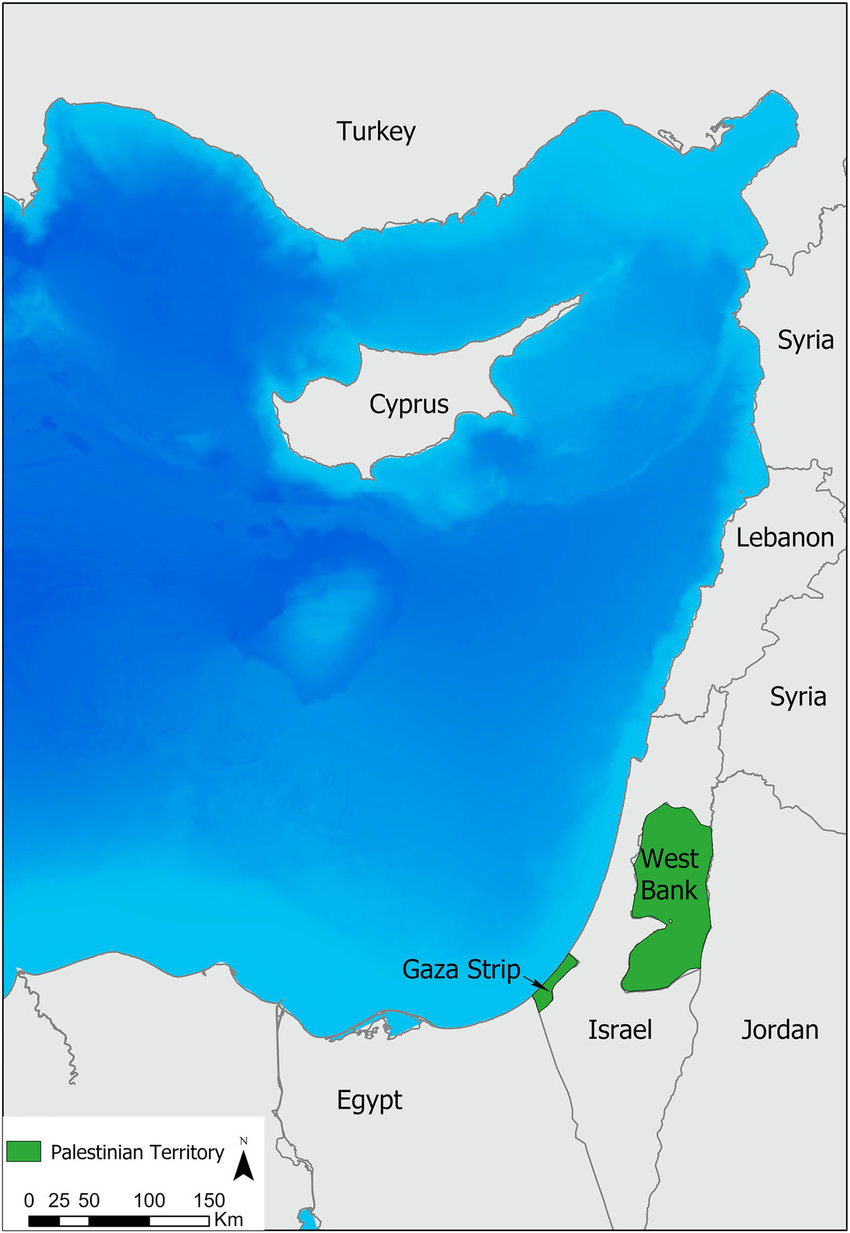
While bombs drop across Gaza, as the armchair experts exchange salvos and blame on social media, one basic fact seems to have been forgotten: Palestinians living in Gaza are humans just like everyone else. Together, they have their own culture, cuisine, and history that is also part of a larger Palestinian one. I want to take this moment to restore, in whatever small way that I can, the humanity of these people whose were already struggling -- but surviving -- before the recent events. This post will delve into the history, culture, and cuisine of the Palestinians who live in Gaza, with a particular focus to their ties to the Mediterranean Sea.

If we go back in time, Gaza was definitely a different place. Long before the first blockade, which Israel imposed after Hamas took control of the strip in 2006. Even before the Yom Kippur war of 1973.

Source: Research Gate

The Gaza strip is located on the southeastern edge of the Mediterranean Sea. There are forty (40) kilometers of coastline, which has a long historical connection with the sea. From 800 B.C.E. to 1,000 A.D., a thriving port known as Anthedon provided sea access to a succession of peoples, including Neo-Assyrian, Babylonian, Persian, Greek, Byzantine and eventually, Islamic empires (such as the Umayyad and Abbasid). During this time, the port played an important role in the incense trade and the silk route.  Goods such as spices, frankincense, myrrh, rare woods and precious stones made their way through the port.  The Anthedon Harbor is on a tentative list for designation as a UNESCO Heritage Site. 

While the Anthedon port continued into history under names, such as El-Blakiyeh, the strip continued to play an important role in connecting people with the sea, as well as promoting trade. Indeed, Gaza continued to serve as an important point in the spice trade until the 19th century. It served as the main port for goods being imported into southern Palestine, as well as Jordan and Iraq.

The Gazan coastline was not only important to international trade in the region, but also the local economy. Gazans have a long history and tradition of shipbuilding and fishing.  Workers would take their boats out to sea, drop their nets, wait patiently a few hours, and then pull up the nets to reveal the catch. At one point in time, that catch included  sardines, sea bass, mullet and various types of bream. The vessels would return with the catch, which would then make its way into the local market and on to the plates of Palestinian families.

Things changed after the Israeli government occupied Gaza in 1967. While a small port continued to exist in Gaza City, its role began to diminish and eventually end when Israel closed the port to international shipping. 

The Israeli government began to impose increasingly greater restrictions upon Gazan fishing boats. For comparison purposes, international law provides that the first twelve (12) nautical miles are territorial waters, with an additional twelve miles constituting a "contiguous zone" over which a country can exert certain authorities, which include fishing. Under the Oslo Accords of 1993, the area of territorial waters (and the contiguous zone) open to Gazans was limited to twenty (20) nautical miles. That area shrank to approximately twelve (12) nautical miles with the Bertini Commitment in 2005. Israel reduced the area open to Gazan vessels to six (6) nautical miles one year later. By 2009, the area open to Gazan fishing boats had been reduced to three (3) nautical miles, which is well short of where much of the fish swim. Israeli's navy enforced the restrictions, not only arresting workers on vessels that ventured too far out, but also shooting at them when at them for crossing the arbitrary lines that Israel drew in the sea. 

The lines changed again, with Israel widening them to fifteen (15) nautical miles in 2019, only to reduce it again one year later to eight (8) nautical miles a year later. The lines would change again and again at the whim of the Israeli government, usually in response to violence by terrorists, leaving Gazan fisheries uncertain about what their future held. Those uncertainties increased with Israel's initial blockade in 2006, which made fishing equipment and boat fuel harder to come by and more costly when found. The restrictions made it extremely difficult for Gazans to make a living off the seas, with an overwhelming number of fishermen living in poverty. 

Yet, there are still stories of how the Palestinians have persevered in the face of adversity. The Fishermen's Wives Seafood Kitchen provides one such example. Twenty wives of Gazan fisherman -- who call themselves Zawajat al-Sayyadin or "Fishermen's Wives" -- opened the kitchen to help their spouses. When the fishermen returned to port with their catch, the wives would prepare the seafood according to customers' orders. These orders include crispy fried fish, grilled fish, fish soups and fish pies. The prepared dishes could be sold for more than the fish. This effort followed a previous one that failed. But, the wives learned from the prior attempt, made changes, and found success, as well as support from a non-profit organization.

Some of the Fishermen's Wives preparing the catch. Source: Middle East Eye

For those Gazans who did not venture out into the dwindling areas where they could fish, they looked for other opportunities to continue their connection with the sea. One such opportunity involves a fish farm that is expected to raise sixty to eighty tons of sea bream each year. The farm was established with the assistance of the United Nations Food and Agricultural Organization and Italy. Palestinians have also established inland fish farms to raise tilapia. Both the sea bream and tilapia present opportunities to address needs within the Gaza strip, as well as potential "exports" to at least the West Bank, if not beyond (when allowed by the Israeli government). 

More importantly, these stories, and many others, provide insights into the Gazan people. Although told over the years, these voices are now silenced by the thunderous tones of war and weakened by the sharp propagandist attacks by each side's supporters.  The ultimate casualty are the innocent civilians who are caught in the cross-fire. They are first deprived of their humanity by outside forces, with the truly unfortunate being deprived of their lives. 

Martin Luther King, Jr. once said, "[o]ur lives begin to end the day we become silent about the things that matter." I have used this blog to protest the inhumanity of how people have been treated, such as Myanmar's treatment of the Rohingya or China's treatment of the Uyghurs. For me, this blog has evolved beyond just cooking food, but to learn about cultures and to gain a better understanding of other people and, most importantly, have a greater empathy for their lived experiences. 

So, I refuse to be silent in the face of so many people who appear to accept or ignore the dehumanization of everyday Palestinians. I will use my voice, through this blog, to recognize their lived experience (as briefly outlined in part, above) and to respect their culture and cuisine by preparing one of their traditional dishes (as set forth below).  

I have selected a dish that dish that represents the Palestinians' ties to the sea, namely, Zibdiyit Gambari (Spicy Shrimp and Tomato Stew). The dish calls for ingredients that are common in Gazan recipes, such as the use of dill, which has been referred to as part of the "Trinity of Gazan Cuisine," with the other parts of the trinity being seafood and resilience.  I also learned that Gazans have a love of spicy food, using chiles to bring a kick to many of their dishes. That is something that, as the more than a dozen dried and ground chiles in my pantry will attest, is something that I have in common with them. This particular dish was not too spicy, as I left out the seeds from the chiles. The end result was still a very delicious stew, that I served with some white rice and flat bread. 

ZIBDIYIT GAMBARI (SPICY SHRIMP AND TOMATO STEW)

Recipe from New York Times

Serves 4

Ingredients:

  • 2 tablespoons extra virgin olive oil
  • 1 medium red onion, finely chopped
  • 1 (14-ounce) can whole, peeled plum tomatoes, juices reserved
  • 1 teaspoon granulated sugar, plus more to taste
  • 3/4 teaspoon ground cumin
  • 1/2 teaspoon caraway seeds
  • 1/4 teaspoon ground allspice
  • Sea salt
  • Freshly ground black pepper
  • 1 to 2 jalapenos, finely chopped, plus more to taste
  • 3 garlic cloves, chopped
  • 2 tablespoons finely chopped fresh dill
  • 2 tablespoons sesame seeds
  • 1 pound raw medium shrimp, peeled and deveined, tails removed
  • Coarsely chopped parsley leaves, for serving

Directions:

1. Sauté the onion and garlic. Heat 2 tablespoons extra virgin olive oil in a large saucepan over medium heat. Add the onion and cook, stirring occasionally, until softened, about 10 minutes. Add tomatoes and their juices; 1 teaspoon sugar, the cumin, caraway seeds, allspice, 1/2 teaspoon each salt and pepper, and 1 cup of water to bring to a boil. 

2. Prepare the jalapeno, garlic and dill paste. Mash the jalapeno, garlic, dill and 1/2 teaspoon together using a mortar and pestle for a few minutes. Alternately, finely chop them together on a cutting board, then  mash them by pressing back and forth using the flat side of your knife until a paste forms. (Both approaches release the oil from the jalapeno and dill and make them more fragrant.) Add to the tomato sauce and stir to combine. Cover and simmer over low heat, stirring occasionally to break down the tomatoes, until the sauce is thickened and flavors meld, about 20 minutes. 

3. Toast the sesame seeds. in a small skillet, stir the sesame seeds over medium heat until golden brown, about 3 minutes. Transfer to a small bowl.

4. Cook the shrimp. When the tomato sauce is ready, taste and adjust the seasoning (you may want to add some more sugar or jalapeno). Finally stir in the shrimp, making sure that they are submerged, and cook over medium heat, stirring occasionally until they have all just turned pink and are cooked through, about 2 to 3 minutes. 

5. Finish the dish. To serve, drizzle with a generous amount of extra-virgin olive oil and scatter with the sesame seeds and chopped parsley.

*    *    *

I will have more to say in my efforts to protest against the dehumanization of the Palestinians who live in Gaza, as well as about the experiences of people around the world. Until then, lets pray for ...

PEACE.

Thursday, August 24, 2023

Watermelon Salsa

We had a lot of watermelon, which we had bought for our daughter's birthday party. I sliced the watermelon into kid-sized wedges. But, we had a lot of watermelon. And, when the party was over, we still had a lot of watermelon. 

Clare had been talking about making some watermelon salsa. I went onto the Internet and began looking at various recipes. Needless to say, there is a lot of commonality amongst those recipes. Besides the watermelon, most recipes called for red onion, jalapenos, lime juice, cilantro and salt.

I wanted to do something a little different. There were a few recipes that provided some ideas. Recipes that called for additional ingredients, such as cucumber and lime zest. I even thought about adding some mango, but I decided to leave that for another day and another recipe.

In the end, I took a recipe that I found on Master Class and made a couple of changes based on other recipes. I added that cucumber (1/2 of a cucumber, diced) and lime zest (about 1 tablespoon). I also made the salt optional, because I did not think it was required. Given all of the fresh ingredients, along with watermelon's natural tendency to leech water, I thought that it was good to go without the salt (which would have only drawn out more water from the ingredients).  

The end result is a colorful, fresh salsa that is actually very good. If I had a summer menu, this salsa would be part of it, along with a good gazpacho. 

WATERMELON SALSA

Recipe adapted from Master Class

Serves several

Ingredients:

  • 3 cups of seedless watermelon, diced
  • 1 small red onion, diced
  • 1/2 cucumber, seeded and diced
  • 1 jalapeno, seeds removed and diced
  • 2 tablespoons lime juice
  • 1 tablespoon lime zest
  • 1/3 cup cilantro leaves, chopped finely
  • Kosher salt, to taste (optional)
Directions:

Combine all of the ingredients together and mix well. Season with salt, if desired, just prior to serving.