Showing posts with label Jalapeno Peppers. Show all posts

Sunday, March 1, 2026

Around the World in 80 Dishes: Yemen

 "Don't worry about Yemen. Yemen started in peace, and it will end its revolution in peace, and it will start its new civil state in peace."

-- Tawakkol Karmon, Nobel Peace Laureate (2011)

The journalist, politician and human rights activist -- Tawakkol Karmon -- spoke those words fifteen years ago when she accepted the Nobel Peace Prize. She accepted the award in the midst of the Arab Spring, when masses rose up against dictatorial regimes across North Africa and the Middle East. One of those revolutions took place in Yemen. That revolution brought down then-President Ali Abullah Saleh, a military officer who served in that role since 1990. 

Yet, over the course of the following fifteen years, peace has proved elusive in Yemen. The country has become a battleground between different forces, political and religious, internal and external. Those battles have inflicted severe harm upon the over 40.6 million residents spread out from the Red Sea across the southern Arabian peninsula to the borders of neighboring Oman. Yet, at least in the West, much of that harm goes untold, as the media focuses more upon the offensives of the political and religious actors. We hear more about missiles being fired from Yemen or ships being seized in the Red Sea than we hear about the millions of Yemenis who face starvation or the lack of essential infrastructure for much of the population. The result is a damning story that talks more about violence and less about the people. 

"The People are Not the Same as Their Government."

One really has to dig deep to get past the narrative that has been built by the media over the years to learn more about the Yemeni people. I have never been to Yemen, although I have always read with fascination and viewed with wonder about the country, its residents and their achievements. For example, there is amazing mud brick architecture, such as the 16th century walled city of Shibham. The city has densely packed, mudbrick buildings that are several stories tall, which has led to the city being  often referred to as the "Manhattan of the desert." And there is the Seiyun Palace in the eastern region of Hadramut, which stands as the largest mud brick structure in the world.  

Another great resource (surprisingly enough) is YouTube, where one could watch videos posted by people who have been brave enough to travel to war-torn and troubled places. Many of those travelers go out of their way to learn about the people themselves. And, as traveler and storyteller Drew Binsky has noted, the Yemeni people are not the same as their government. His video can be watched here: 


I strongly recommend Drew's videos generally, because of his efforts to talk with the people of a country to learn more about their culture and cuisine. In his video about Yemen, Drew is honest about the difficulties Yemenis face, but he is equally honest about the Yemeni themselves. As Drew says in his video, "the people are not the same as their government." Yemeni's hospitality is warm, curious and genuine. Yemenis are quick to welcome people in, share food, and talk about themselves, their cuisine and their culture. 

"Yemeni cuisine is ... a cultural narrative woven into every dish."

Yemeni cuisine differs from the cuisine of Arabic cultures. The differences arise in part from Yemen's relative isolation from the broader Arabic world. The country lies at the southwestern end of the Arabic Peninsula. The Rub al Khali -- the "Empty Quarter" -- limits land routes to Yemen, leaving only those that trace along the coastline of the peninsula. Yet, Yemen has nearly 2,000 miles of coastline, as well we major ports like Aden, Hodeidah, Mukallah and Nishtun. Yemen's ports played an important role in the maritime history of the spice trade, welcoming foods and ingredients from Persia, India and as far away as Indonesia. 

Over time, these foods and ingredients, along with culinary practices, became interwoven with the indigenous ways of cooking. They helped to create a cuisine that sets itself apart from other Arabic cuisines. There is a diversity that, for example, blends Persian cooking methods and indigenous cooking ingredients, Turkish ingredients with local fish, and much more. It is a cuisine that focuses on slow cooking methods, with many herbs and spices (cardamom, caraway, cumin, fenugreek, saffron, and turmeric, just to name a few), and, of course, chiles. The dishes are often served communally, shared among family and friends. Once again, a practice reflective of Yemeni culture and hospitality. 


The rich culinary history cannot be viewed in isolation from the present situation in Yemen. The toll of decades of war, both fueled internally and externally (by Saudi Arabia and the UAE), have created a situation where mass starvation has the people in its grips. In the good times, Yemen imported a substantial amount of its food (sometimes up to 90% of it); war makes such imports problematic. It also makes the delivery of food aid and other humanitarian aid very difficult. As a result, mass starvation threatens large numbers of Yemenis. The United Nations estimated that, as of June 2025, nearly 5 million Yemenis faced food insecurity, with nearly 1.5 million of those Yemenis facing emergency food security. To put it in context, that would be the same as the entire population of Dallas, Texas or San Diego, California facing emergency food insecurity. And those are just the numbers from the southern regions of Yemen. 

There are numerous reasons for food insecurity in Yemen. That discussion is best left to another post or perhaps another blog. (There is a lot of reporting about food insecurity in Yemen out there). The point here is that such insecurity is projected only going to get worse, as the violence -- but not humanitarian assistance -- continues. The U.S. Agency for International Development provided substantial assistance (as much as $1 billion in Fiscal Years 2019 and 2020) that helped to provide food, medical care, safe drinking water and more to Yemenis. With the Trump administration's closure of USAID, the ripple effects are felt across Yemen, such as, by way of example, the closure of malnutrition support services for Yemeni children, as well as pregnant and breastfeeding mothers. 

MAIN COURSE

Given this rich culinary history, and the ongoing food insecurity issues, this particular occasion is a challenge for me in more ways than one. On the one hand, there are a wide array of main dishes that could be the subject of this challenge. For example, there is mandi, which is considered Yemen's national dish. It consists of lamb or chicken, marinated in spices, and cooked in a tandoor. There is also maraq, which is a soup made with lamb, that often serves as a first dish but can be used to make salta, a stew that is also considered a national dish. On the other hand, there is the knowledge that millions of Yemenis are struggling to find that "one bite."

Lamb shanks before the marinade.

In the end, I decided to make Lamb Haneeth. It is a dish that originated in the Hadhraaut region, which is the area that Drew Binsky traveled when he was in Yemen. However, Lamb Haneeth is more than just a regional dish; it has deep roots in Yemeni culture and cuisine. Indeed, this dish has been described as "an expression of familial bonds, cultural continuity and the preservation of a culinary legacy that transcends time and borders." The word haneeth hints at that legacy, as it refers to slow-cooked meat, which is a cornerstone of Yemeni cuisine.

The dish is also served in a manner that is truly reflective of Yemeni culture. Lamb Haneeth is served "family style" or "communal style," on a large platter with rice to be shared by guests and family members. Such a dish makes the perfect challenge for me to prepare. 

LAMB HANEETH

Recipe from Every Little Crumb

Serves 4

Ingredients:

  • 1 bunch scallions
  • 1 bunch chives
  • 3 peeled garlic cloves
  • 1 tablespoon cumin powder
  • 1 tablespoon turmeric powder
  • 1 tablespoon salt
  • 1/2 tablespoon black pepper powder
  • 3 cloves
  • 4 whole cardamom pods
  • 3 bay leaves
  • 1/3 cup olive oil
  • 1.5 tablespoons butter
  • 2 dried lemons (optional)
  • 4 lamb shanks or lamb pieces with bone (about 1.5 pounds)

Directions:

1. Prepare the marinade. Combine all the ingredients from the green onions through to the butter (everything but the dried lemon and the lamb) in a food processor or blender and process until well blended and has turned into a thick paste consistency. If you need to, add a splash of water if the sauce is so thick that it won't combine well. 

2. Marinate the lamb. Pour the green sauce over the lamb and toss to coat thoroughly, then cover tightly by placing a sheet of parchment paper on top of the lamb, then sealing with foil and marinade for as much time as you have, anywhere from four hours to overnight. 

3. Roast the lamb. Preheat the oven to 465 degrees Fahrenheit. Remove the shanks from the wrapper Place the shanks, covered with foil, on a foil covered pan in the oven for 1 hour. After 1 hour, reduce the temperature to 350 degrees Fahrenheit and cook for another 2 hours. Halfway through, toss the lamb, flipping the pieces over. When 30 minutes of cooking time remain, uncover the dish so the outside of the lamb crisps up a little.

4. Finish the dish. Serve with rice, preferably topped with toasted nuts and garnished with chopped cilantro.  

CONDIMENT

Shatta is a spicy hot sauce that often accompanies dishes in Yemen. It is not unique to Yemen, and, its culinary history can actually be traced to the Palestinian cuisine. The popularity of the hot sauce enabled it to transcend Palestine to reach tables in Lebanon, Syria, Jordan, Saudi Arabia and, of course, Yemen.

This condiment is typically prepared with long red chiles or jalapeno chiles. I did not have access to red chiles, so I went with jalapenos. The end result is not a fiery red hot sauce, but a deceptively hot green sauce (as I left as many of the seeds in as possible.)

SHATTA

Recipe from My Goodness Kitchen

Ingredients:

  • 250 grams (1/2 pound) long red or jalapeno chiles
  • 1 tablespoon salt, non-iodized
  • 3 tablespoons apple cider vinegar
  • 1 teaspoon lemon juice
  • 3 tablespoons olive oil

Directions:

1. Prepare the pepper mixture. Slice the chiles into coin-wide rounds. Combine the sliced chiles with the salt and stir well. Transfer the salted chiles to the jar and pop the lid on. Place the jar in a cool, shady place for 3 days or transfer to the fridge for up to 7 days.

2. Finish the hot sauce. Drain the chiles through a colander or sieve and transfer them to a food process or mortar and pestle. Add the vinegar and lemon juice and process - or pound in the pestle - until you are happy with the texture. Transfer the chile paste back to its jar and pour in enough olive oil to cover it. Store in the fridge for up to six months. 

*     *     *

In the end, the Lamb Haneeth was delicious and, when served with the shatta, it seemed to be truly reflective of Yemeni culture and cuisine. A land where it is hot (over half of Yemen is desert), but, like the people, warm and welcoming to those who are brave enough to make the trip there. This challenge was important to me, because it is important to highlight what does not get disseminated by the global media, and to put the focus where it belongs ... the Yemeni people. 

PEACE.

Tuesday, September 16, 2025

Around the World in 80 Dishes: Mexico

"Mexican food is far more varied than people think."

-- Gael Garcia Bernal, Actor & Filmmaker

That statement is particularly true if the people happen to live in the United States. In a country where the history of Mexican food tells the tales of Chi-Chi's and Chili's, along with Taco Bell and Chipotle, one could easily think that Mexican food consists of nachos, tacos, quesadillas and chalupas. Yet, the entirety of Mexico, from the Rio Grande to the Usumacinta, from the Pacific to the Caribbean, plays host to a wide range of different cuisines. The foods of the arid stretches of Sonora differ from those along the coastline of Jalisco. Those dishes differ from the indigenous cuisines of Oaxaca and Tabasco.

Americans love Mexican food, but as Anthony Bourdain once noted, "we have barely scratched the surface of what Mexican food really is." In some respects, Mexican cuisine is older than "the great cuisines" of Europe. And, it can stand its ground with those cuisines as well. A mole sauce from Oaxaca is as complicated to make (if not more so), in terms of ingredients and processes, as any sauce from storied European cuisines that are featured the Michelin-starred kitchens of restaurants anywhere in the world.  

The regional cuisines of Mexico
In order to understand the range of regional cuisines in Mexico, one needs to look at the country itself. Generally speaking, one could outline at least seven different regional cuisines. There is the El Norte (Aguascalientes, Baja, Sonora, Chihuahua, Cohuila, Durango, Nuevo Leon, Tamaulipas and Zacatecas), with a range of seafood dishes from the coasts of the Pacific Ocean and Baja California) to the beef dishes from the ranches of Sonora and Chichuahua. (I think this could be split in two separate regions on its own.) There is the Costa del Pacifico Norte (Comalina, Jalisco, Nyarit, and Sinaloa), which is known for dishes such as pozole and birria. There is the Bajio (Guanajuato, Michoacan, Queretaro and San Luis Potosi), where rice and pork feature prominently. There is Costa del Pacifico Sur (Chiapas, Guerrero, and Oaxaca) where one could enjoy the cuisine of the indigenous peoples. Then there is El Sur (Campeche, Quintana Roo and Yucatan), where one could enjoy pork dishes like pibil. There is El Golfo (Tabasco & Veracruz), where, as noted above, there is Afro-Cuban and Creole influences. Finally, Mexico Central (Federal District, Hidalgo, Mexico, Morelos,  Puebla, and Tlaxcala), where many of the other regions' influences meet. 

This variety makes the preparation of a main dish from Mexico especially challenging. I have previously dabbled in the particular regional cuisines, whether it is preparing the Mole Verde Zacatano or Tacos de Chapulines con Tequila y Guacamole. Yet, which cuisine will reign supreme for this Mexican round of my Around the World in 80 Dishes Challenge? 

With so many regions, states and cuisines to choose from, I decided to introduce some randomness. I used a random address generator to provide me with three addresses as starting points to choose the cuisine and the dish. Those addresses gave me the following Mexican States: (1) Sonora; (2) Jalisco; and (3) Tabasco.

APPETIZER

I have never traveled to the State of Sonora, let alone walked the streets of its capital, Hermosillo, during the 1980s. (I would have been in my teens during that time.) Yet, if one did, they would have come across the culinary creation known as the Sonoran Dog or the Danger Dog. Vendors, known as dogueros, grilled bacon-wrapped hot dogs, which they placed in bollilo bun could be customized with a rage of toppings and condiments. Toppings typically included tomatoes, onions, beans, guacamole or salsa, while condiments could include mayonnaise or mustard. 

Grilling the dogs is the key. One cannot boil or steam them. However, some vendors operated in less than sanitary conditions or in violation of food preparation regulations, which gave rise to the name "danger dogs." Fortunately, I found a recipe on Saveur from Danny Trejo, the famous actor who owns restaurants like Trejo's Cantina and Trejo's tacos. There is no issue with the food, the only danger would be crossing one of characters played by Trejo, like Navajas from Desperado or Machete from the movie of the same name.

DANGER DOGS (SONORAN DOGS)

Recipe from Danny Trejo

Serves 4-6

Ingredients (for onions and peppers):

  • 2 tablespoons olive oil
  • 1 medium onion, thinly sliced (1 1/2 cup)
  • 1/2 medium green bell pepper, thinly sliced (2/3 cup)
  • 1/2 medium red bell pepper, thinly sliced (2/3 cup)
  • Kosher salt

Ingredients (for the Danger Dogs):

  • 2 jalapenos, quartered lengthwise
  • 6 hot dogs
  • 6 bacon slices
  • 6 hot dog buns
  • 2 tablespooons vegetable oil

Directions:

1. Prepare the onions and peppers. In a large skillet, add the oil and onion and cook, stirring occasionally, until softened and beginning to brown, about 7 minutes. Add the green and red bell peppers and cook, stirring occasionally, until everyhting is soft and deep golden brown, 10-12 minutes. Transfer to a bowl, season to taste with salt, and set aside. 

2. Prepare the jalapeno peppers. In an empty skillet, add the jalapenos skin-side down and cook over medium heat without moving until charred, about 5 minutes. Turn them owner and cook until tender, about 5 minutes more. Transfer to a bowl and set aside. Return the skillet ot the stove and turn off heat. 

3. Make the danger dogs. Tightly wrap the hot dogs in bacon from end to end. To the empty skillet, add the oil and turn the heat to medium. When it's hot and shimmering, add the hot dogs and cook until browned on the bottom, about 5 minutes. Using tongs, give each hot dog a quarter turn and cook for another 5 minutes. Repeat on the remiaining two sides until the hot dogs are crisp all over. 

4. Finish the dish. To serve, spoon the reserved onions and peppers into buns, then top each with one jalapeno slice. Top with the hot dogs and serve immediately. 

MAIN COURSE

As the story goes, the Spanish conqusitadors were not the only ones to arrive in what is now Mexico during the 16th century. Those conquistadors brought goats with them, which were used to help clear the rugged terrain as the conquistadors and colonizers made their way across the Americas. However, the goats became a problem. Their numbers multipled and, as the Spanish colonizers settled in, there was not as great of a need for the goats. Unlike cattle or pigs, the Spanish were not fans of eating cabro or cabra, as they did not like the smell or taste of the gamey meat. So, in Jalisco, they decided to give the goats to the indigenous peoples. The goats were just as much of a problem for the natives, as the goats ate everything, including the crops. So the indigenous people decided to eat the goats. They used traditional preparations, using spices and herbs as they cooked the meat slowly in vinegar and water, until it became a delicious soup. The Spanish were unimpressed, referring to the soup derogatorily as "birria," which means "worthless" or "useless." 

That worthless soup outlived the Spanish empire and became an important part of the cuisine in Jalisco. A person who prepares the iconic soup became known as birriero. The preparations began to vary with regions within Jalisco and with the cooks, but the end product - the soup with its rich broth did not change. As birria expanded across Mexico, there were additional changes. For example, as it reached Tijuana in the 1950s, a street food vendor named Don Guadalupe Zarate decided to use beef instead of goat. There is also a legend in connection with Zarate that customers asked him to add liquid to the birria, which led to the beef soup. (I think that this part is probably legend, as other sources indicate that the preparation of birria as a soup goes back to Jalisco.)

Birria continued its expansion northward, along with Danger Dogs, into the United States. Culinary migrants, whose aromas and flavors would add to the tables in kitchens and restaurants across the country. Birria could not make it on its own, it needed real people, real migrants who came to this country seeking a better life for themselves and their families. At first, there was Chalio Luis, who brought birria to the Los Angeles, California in the 1970s. Then there was Reuben Ramirez, along with his cousins Oscar and Omar Gonzalez, who opened a birria stand in South Central Los Angeles, California in 2013. There were countless others, who brought their knowledge as birreros or just as someone who could prepare birria to the U.S. for people to eat and enjoy. 

Today, Americans have embraced birria, with restaurants serving the beef and broth, often in taco form, in restaurants from Washington, D.C. to Los Angeles, California. However, our government has turned against the Mexicans migrants and residents who live in the United States (along with all other individuals with brown or black skin). Governmental authorities have increased their efforts to deport them, with masked individuals rounding up individuals and taking them away in unmarked vans to detention centers and prisons. These facts were not lost on me as I prepared this dish. 

BEEF BIRRIA

Recipe from Isabel Eats

Serves many

Ingredients:

  • 4 to 5 pounds chuck roast, cut into large 4-inch chunks
  • 1/2 tablespoon kosher salt
  • 1/2 tablespoon ground black pepper
  • 1 1/2 tablespoon olive oil
  • 12 guajillo chiles, rinsed, stemmed and seeded
  • 5 ancho chiles, rinsed, stemmed and seeded
  • 5 arbol chiles, rinsed and stemmed
  • 2 large Roma tomatoes
  • 1/2 medium yellow onion
  • 1 4-inch Mexican cinnamon stick
  • 3 bay leaves
  • 1/2 teaspoon whole black peppercorns
  • Water, as needed
  • 2 cups beef broth
  • 1/4 cup distilled white viengar
  • 5 cloves garlic
  • 1 teaspoon ground cumin
  • 1 teaspoon dried Mexican oregano
  • 1/2 teaspoong ground cloves

Directions:

1. Brown the meat. Generously season the meat with salt and pepper on all sides, and heat the olive oil in a large pot or Dutch oven over medium high heat. Working in 2 batches, add the meat and sear on all sides until browned. Remove the pot from the heat, add the seared meat back into the pot and set aside. 

2. Continue with other ingredients. While the meat is searing, add the guajillo chiles, ancho chiles, arbol chiles, tomatoes, onion, cinnamon stick, bay leaves and pepper corns to a medium pot. Cover completely with water and bring to a boil over high ehat. Reduce the heat to low, cover, and cook for 10 minutes. 

3. Blend the other ingredients. Using a slotted spoon, transfer the softened chiles and other ingredients to a large blender. Add 1 cup of the chile soaked cooking water, the beef broth, white vinegar, garlic, cumin, oregano and cloves. Blend on high for a few minutes until compeletly smooth. (You may have to do this in 2 batches if your blender is not big enough.) Strain the blended sauce through a fine mesh strainer into the pot with the seared meat. Discard any solids left behind.

4. Cook the birria. Stir the meat and chile sauce together to combine and bring to a boil over high heat. Reduce the heat to low, cover and simmer for 3 to 3 1/2 hours until the meat is fall-apart tender. 

5. Finish the dish. Transfer the meat to a large bowl and shred it with two forks. Add the meat back into the consomme and serve as a stew in bowls with diced onion and chopped cilantro, or as tacos in corn tortillas with shredded Oaxaca cheese, cilantro and diced onions.

SAUCE

For the last dish, which comes from the state of Tabasco, a State that lies along Mexico's Caribbean coastline of Mexico. This region has a long history, stretching all the way back to the Olmec civilization, which predominated over the area from 1400 BCE to about 400 BCE. After the decline of the Olmecs, the Chontal Maya civilization emerged, controlling the area from 300 CE until the Spanish conquistadors and colonists arrived. 

I wanted to find a recipe that draws from the pre-Spanish culinary traditions. I found it in chirmol. I am not talking about the Guatemalan salsa. Instead, it is a "stew" whose origins go back as far as the Chontal Maya civilization, if not further back in time. The quotation marks are used because chirmol is not so much a stew, as it is a mole. A sauce prepared with a range of ingredients that set it apart from other preparations. For the chirmol, the key ingredients are the tortillas, which are burnt; the anchos, which provide the smoke and spice; and, most importantly, the petitas or pumpkin seeds. 

The sauce is very versatile, but it is usually served over chicken, fish or pork. Of course, chicken and pork are not indigenous ingredients, both of which having been brought over by the Spanish. If you want to de-colonize the dish, I would use either fish or turkeys, which had been domesticated by indigenous people in the area long before Spanish arrived. 

CHIRMOL TABASQUENO

Recipe from Hunter Angler Gardener Cook

Serves 6

Ingredients:

  • 3 stale tortillas or tostadas
  • 3 to 5 ancho chiles, stemmed and seeded
  • 1 head of garlic, cloves separated but not peeled
  • 1 white onion, peeled and quartered
  • 1/2 pound Roma tomatoes, halved lengthwise
  • 1/3 pound pepitas or pumpkin seeds
  • 3 cloves
  • 1 tablespoon achiote paste (optional)
  • 1/2 teaspoon anise seeds (optional)
  • 1 hoja santa or small bunch of epazote (optional)
  • 2 tablespoons lard or olive oil
  • 1 pound of crab meat (or any other protein)

Directions:

1. Prepare the tortillas. Get a large heavy frying pan or comal very hot. Partially char the stale tortillas, you want lots of black marks, but don't blacken them totally. If you are using tostadas, no need for this. 

2. Prepare the chiles. Briefly toast the ancho chiles, pressing down on them with a spatula. You want to see some blistering, so maybe 10 to 30 seconds per side. Submerge all the toasted chiles in warm water. 

3. Prepare the other ingredients. Arrange the onions garlic and tomatoes on the hot pan to char them. You want serious blackening here. The tomatoes will take the longest, and don't be tempted to move them too soon or you will leave all the good blackened bits in the pan. If that happens, scrape it up immediately and set the scapings aside.

4. Toast the pepitas. In another pan, toast the pumpkin seeds over medium high heat until they start to pop. Move to the bowl of a blender. Crush up the toasted tortillas and put them in the blender too, along with the cloves, achiote, and anise seeds, if using. Add enough water to the blender to turn this all into a runny paste. Pour the contents into a large bowl. 

5. Continue the preparation. When the vegetables are nicely charred, peel the garlic, then add everything to the blender with the soaked chiles and the joa santa leaf if using. Add some of the chile soaking water and blend this to a puree too. Add it to the bowl and mix well. Add salt to taste.  

6. Finish the dish. Heat the lard or olive oil in a pot over medium high heat and when it's hot, add the chirmol. Stir well to combine and drop the heat to low. Let this simmer 15 to 20 minutes. Serve over cooked crabmeat or other protein. 

*     *     *

This challenge has special meaning. I strived to complete it by Mexican Independence Day in 2025, during a time in which the administration of the United States was using its enforcement powers in unconstitutional and inhumane ways against Mexicans who were living here both lawfully and without proper documentation. It was also reported that the administration planned to have Immigration & Customs Enforcement target Mexican Independence Day celebrations in Chicago, Illinois. Rather than persecute people, I wanted to join in the celebration of their culture.

In so doing, I made three interesting dishes from across the country. All three were successes and I look forward to where the next challenge will take me. 

PAZ.

Sunday, July 27, 2025

Goat Sukha

Whenever I order food from a particular Indian restaurant, I always include an appetizer of goat sukka (or sukha). As an aside, this particular restaurant allows its customers to choose between an American level of spice and an Indian level of spice for their dishes. I like a restaurant that not only caters to the local Indian community in this way, but also offers those options to someone like myself, who is not Indian. Given my love for very spicy foods, I always order my dishes from this restaurant at the Indian spicy or Indian very spicy level. 

Being able to choose spice levels in accordance with the Indian palate is important to me, because I want to experience the foods of southern India as one would prepare them for people who live in that region. Chefs and cooks alike across southern Indian states like Karnataka, Kerala and Tamil Nadu have embraced chiles. In so doing, they create dishes that contrast with those from the north of India. 

A sukka (or sukha) is a dry curry dish that originates from the south of India. The word sukha is Hindi and means "dry." Unlike a typical curry, sukhas are not prepared with a yogurt, tomato, or coconut milk base. Instead, recipes typically call for a combination of chiles and spices that, when prepared, cling to the featuerd protein with a paste-like texture. And, as for that protein, it could be just about anything. The most common versions of sukhas feature mutton or lamb, but one can find many recipes for Mangalore Chicken Sukha or even Chana Sukha (for vegetarians).  

For this recipe, I attempted to recreate the goat sukka dish from one of my favorite restaurants. I had some extra goat meat from another recipe that I prepared (which will also be posted on this blog). I encountered some difficulty finding a goat sukha recipe, which I needed to ensure that I prepared the goat properly. I eventually decided to use a mutton sukha recipe, for which there are many, and incorporated the directions for preparing goat from that other recipe I mentioned above. 

In the end, this dish was good, but it was not the goat sukka that I would order from the restaurant. There are two reasons for this conclusion. First, I am not as good at cooking goat as the Indian cook or chef at that restaurant. (Despite my best efforts, the goat was a little overcooked.) Second, the recipe would probably translate to an Indian mild or Indian medium on spice level. As noted above, my minimum threshold is Indian hot. 

GOAT SUKHA

Recipe adapted from Relish the Bite

Serves 2-3

Ingredients:

  • 1 pound goat, cubed, bone-in
  • 1/2 teaspoon turmeric
  • Salt, to taste
  • Garlic, 5 cloves minced
  • 5 dried chiles (e.g., Kashmiri)
  • 1/2 teaspoon fennel seeds
  • 1/4 cup onions, sliced thinly
  • Few curry leaves
  • 4 green chiles (e.g., jalapeno)
  • 1 teaspoon chile powder
  • 1 teaspoon coriander powder
  • 1 teaspoon cumin powder
  • Salt, to taste
  • 2 teaspoons oil
  • Lime juice and coriander (cilantro), chopped, for garnish

Directions:

1. Prepare the goat. Place the goat, turmeric and salt in a sauce pan and cover with water. Bring to a boil and boil until cooked, about 15 to 20 minutes. Remove the goat from the water, strain the water through a fine mesh and reserve. 

2. Prepare the base. While the goat is cooking, combine the garlic, dried chiles and fennel seeds in a mortar and pestle. Grind the ingredients, with a dash of salt, until they become a paste.

3. Prepare the curry. In a pan, heat the oil over medium high heat. Add the onions, green chiles and curry leaves. Saute until the onions become translucent and the chiles become softer. Add the paste, along with the red chile powder, coriander powder and cumin powder. Saute well. 

4. Finish the dish. Add the goat and stir. Add some of the reserved water and let it cook until the water evaporates. Drizzle some lime juice and garnish with the chopped coriander (cilantro). Serve with rice and naan. 

PEACE.

Saturday, July 12, 2025

Grilled Octopus, Roasted Salsa Verde, Tomato Piquillo

For the past several years, my work would take me to Fort Lauderdale, Florida. Most of those trips involved a stay at the Hilton Fort Lauderdale Beach Resort. Each stay inevitably included at least one lunch and/or dinner at a restaurant within the hotel. The restaurant is Sun Surf Sand or S3. 

I spent each occasion sitting at a table on the outside patio of the restaurant, staring at the Atlantic Ocean whose waves rose up to the beach across the street. I rarely spent much time looking at the menu, because I always knew what I wanted. It was an octopus dish, prepared with a salsa verde and a tomato piquillo. 

During my last trip to Fort Lauderdale, I probably ate that dish three times over the course of two weeks. It is perhaps the best dish on the restaurant's menu and it was always something that I looked forward to when I was in town. A plate of nice sized octopus pieces and large beans, brought together with the salsa verde and highlighted with the tomatoes and leafy greens. 

When I returned home, I decided that I would try to prepare this dish myself. I purchased some pre-cooked octopus tentacles (which makes preparation of this dish really easy), and all of the other ingredients. While I could try to prepare the dish as I remembered it at S3, I decided to do things a little differently. First, I decide that I would grill the octopus tentacles. That would provide a slight crunch that could contrast with the beans and the tomatoes. I also decided to prepare a roasted salsa verde. This required a quick roasting of the tomatillos, chile and garlic before blending them together with the cilantro to create the sauce. 

In the end, I am glad I made this dish. It made for a delicious, light lunch. Given how easy it is to make, it will be made again and again in the future. 

GRILLED OCTOPUS, ROASTED SALSA VERDE, TOMATO PIQUILLO

A Chef Bolek Original

Serves 4

Ingredients (for the octopus):

  • 1 pound octopus tentacles
  • Olive oil
  • 1 can of gigante beans or butter beans
  • Handful of micro-greens 

Ingredients (for the sala verde):

  • 1 pound tomatillos, husked and rinsed
  • 1/4 cup fresh cilantro, minced
  • 1 garlic clove, peeled
  • 1 serrano or jalapeno pepper, stem removed
  • Sea salt

Ingredients (for the Tomato Piquillo):

  • 1 cup grape tomatoes
  • 1/4 piquillo pepper

Directions:

1. Complete initial preparation. Rinse the beans under cold water and set aside. Rinse the microgreens under cold water, set aside. 

2. Prepare the salsa verde. Spread tomatillos out on a baking pan. Roast tomatillos about four inches under the broiler for about 6 minutes until they start to brown on one side. Flip the tomatillos and continue to roast them for another 6 minutes. Remove the tomatillos and set aside to cool. Once they are cool, add the tomatillos to a blender wtih the cilantro, chile, and garlic. Blend until you reach your desired consistency, season with sea salt.

3. Prepare the tomato piquillo. Finely dice and mash the piquillo pepper into a paste. Add the tomatoes to a bowl and then the pepper paste. Combine until the tomatoes are covered and season with a little salt. 

4. Grill the octopus. Heat a grill over medium high heat. Brush the octopus legs with olive oil. Grill the legs, about 3-4 minutes per side, until the legs are charred. Remove from the grill. 

5. Finish the dish.  Portion out the beans on four plates or dishes. Slice the octopus tentacles in relatively even pieces, and portion them to each plate or dish. Drizzle the roasted salsa verde over the octopus and beans. Garnish with the tomatoes and microgreens. 

PEACE.

Sunday, July 14, 2024

Black Pork Curry

Everything I read tells me that black curry is essential to Sri Lankan cuisine. I can believe that premise, but I have spent a lot of time trying to find an answer as to why that would be the case. Readers of this blog know of my love for curries generally and of Sri Lankan cuisine in particular. (Quick update for others: Sri Lanka basically curries everything.) 

There are a wide range of curry powders in Sri Lanka, but black curry seems to stand out.  It seems to be a uniquely Sri Lankan curry powder. (There is a "black curry" that arose in Japanese cuisine, but it is different than what I am talking about here - that will be saved for another post.) I have not been able to find a similar curry blend in any of the other subcontinent cuisines. 

It may be simply another way to describe roasted curry powder, which is definitely a Sri Lankan thing. I have a lot of roasted curry powder on hand and have used it to prepare roasted curry wings and an oyster curry.

For this recipe, I have prepared a black curry featuring pork. The curry mix combines roasted Sri Lankan curry powder with some other traditional ingredients, such as cardamom, cinnamon, and black pepper. The use of tamarind also helps to darken the color of the mixture, perhaps adding to the description of a black curry. The only substitution that I made was to add a roasted chile powder, which I had purchased from a Sri Lankan market a while back. That powder was also extra hot, which helped to reinforce the kick of this dish. 

In the end, this black pork curry was amazing. The only downside is that, while it serves four, I found myself eating a serving for two because it was so good. I will definitely need to make this dish more often. 

BLACK PORK CURRY

Recipe from The Flavor Bender

Serves 4

Ingredients (for the marinade):

  • 4 teaspoons black pepper, whole
  • 6 cardamom pod seeds, crushed
  • 1 heaping teaspoon of Sri Lankan roasted curry powder
  • 1/2 teaspoon salt
  • 1/4 teaspoon ground cinnamon
  • 1/2 teaspoon cayenne pepper
  • 3 teaspoons tamarind paste

Ingredients (for the curry):

  • 1.5 pounds pork loin chops or shoulder
  • 2 jalapeno peppers, sliced (or serrano peppers) for more heat
  • 1 inch of peeled ginger, minced
  • 3 garlic cloves minced
  • 1/2 medium onion, chopped
  • 1 tablespoon lemon juice (optional)
  • 2-3 bay leaves
  • 1 tablespoon sugar
  • Salt to taste

Directions:

1. Prepare the pork. Cut the pork into 1/2 to 1 inch cubes. If the pork has bones, add those to the curry as well. 

2. Prepare the masala. Crush the cardamom pods into a powder and mix it with the black pepper, curry powder, salt, cinnamon and cayenne pepper. Crush and mix all of this together using a mortar and pestle. Add 2 tablespoons of this spice mix, tamarind paste and 1 tablespoon of oil to the pork and mix to coat. Leave to marinate for a few hours or overnight in a refrigerator.

3. Prepare the curry. Heat 2 tablespoons of oil in a saucepan over medium heat. When the oil is hot, add the bay leaves, ginger and onions and sauté until the onions become translucent. Add the garlic and sliced jalapeno peppers and sauté for another 30 seconds. Add the marinated pork and sugar and stir t o mix well. Add about 1/2 cup of water and bring this to a boil. Lower the heat to medium low and let it simmer for 1 hour. Check on the curry and add extra water if it dries out.

4. Finish the dish. Taste and add more salt and some lemon juice if needed.

PEACE.

Monday, July 8, 2024

Mango Gazpacho

Picture yourself in a place with a contrast of landscapes: mountains rising in the background, with cliffs that give way to valleys. As one proceeds into the valleys, they would find olive trees and almond trees, along with orange and lemon groves. The greenery is broken up by small towns that still retain their moorish character, with squares and fountains. If you can picture this scenery in your mind, you have taken yourself to the region of Andalusia, Spain, known as La Axarquia.

Apart from the beautiful surroundings, the region is also particularly known for one agricultural commodity (above and beyond the almonds, olives, lemons and oranges) ... the European mango. That landscape provides the basis for La Axarquia to fashion itself as "the home" of that fruit. Of course, it takes more than a few mountains, valleys and greenery to grow mangos. La Axarquia has a subtropical climate that provides more than 300 days of sunlight per year, with temperatures that range often from the mid 70s to the mid 80s Fahrenheit in the summer. 

There are five different mango varieties that are cultivated in La Axarquia. The most common one is known as the Osteen. It makes up more than half of the production. (Interesting side note: the Osteen mango originated in Merritt, Island Florida, named after the Osteen family who lived there and first cultivated this particular type of mango back in 1935. It made its way to Spain thereafter.) The remaining four mango varieties - the Kent, Tommy Atkins, Keitt, and Red Palme -- constitute the remainder of the mangos cultivated in the region. (Another side note: the Tommy Atkins is probably the most popular mango in the United States.)

It seemed to be only a matter of time until the mango of La Axarquia would be incorporated into a dish of Andalucia, namely, gazpacho. This particular version of gazpacho relies more on citrus, namely orange juice and lime juice, than a traditional gazpacho. It is just my speculation, but it may be an effort to balance the sweetness of the mango. The recipe does include more traditional ingredients, such as bell pepper, cucumber, onions, and garlic. These ingredients, when pureed, help to give the soup some texture and depth. 

The end result is a very different and very delicious take on gazpacho. I am sure that the mangos I were probably of the Tommy Atkins variety, as opposed to the Osteen mango. The former varietal tends to be more tart with sweet notes, while the latter seems to be the inverse, more sweet with touches of acidity or tartness. Now that I have prepared this dish, as well as learned about the different mangos out there, I will have to be more mindful when I am in the store.  If I ever come across Osteen mangos, then I could truly transport myself culinarily to La Axarquia.

MANGO GAZPACHO

Recipe from Sprig and Vine

Serves 6

Ingredients (for the gazpacho):

  • 2 cups diced mangoes
  • 2 cups orange juice
  • 1 cucumber, diced
  • 1 red or yellow bell pepper diced
  • 1/2 red onion, diced
  • 1 clove garlic
  • 3-4 tablespoons lime juice
  • 1 jalapeno
  • 3 tablespoons chopped coriander (cilantro)
  • Salt, to taste
  • Pepper, to taste

Ingredients (for the toppings):

  • 1 cup of finely diced mango, cucumber, bell pepper
  • 1 cup micro greens (optional)

Directions:

1. Blend the gazpacho ingredients. Blend the mangoes and orange juice in a blender until smooth and pureed. Add the cucumber, bell pepper, onion, garlic, lime juice, olive oil and jalapeno, along with a cup of iced water and blend again. Add more water if you want a thinner consistency, or leave it as is for a thicker gazpacho.

2. Season the gazpacho. Season with salt and pepper. Taste and adjust according to preference: add more lime juice for zing, chile for heat, etc. Stir in coriander (cilantro).

3. Chill the gazpacho. Let the gazpacho chill in the refrigerator for 4-6 hours before serving. This allows the flavors to mingle. 

4. Finish the dish. To serve, divide into bowls. Top with the mix of mangoes, cucumber and and bell pepper. Garnish with microgreens, if using. 

PEACE.

Monday, November 6, 2023

Zibdiyit Gambari (Spicy Shrimp and Tomato Stew)

"If cooking is in part an act of preservation, a way to sustain cultural identity, it is also an art of resilience, demanding the ability to adapt."  --  Ligaya Mishan

The New York Times columnist, Ligaya Mishan, wrote those words about the Palestinian people and their cuisine in February 2020. However, as I write this post, these words take on more meaning and, in a very real sense, more urgency. 

On October 7, 2023, Hamas perpetrated barbaric acts of murder, rape and inhumanity upon Israeli and other civilians. The scale of the terror attacks shocked the world, which quickly and rightfully rallied around the Israeli people. The Israeli government responded with a "self defense" campaign, vowing to end Hamas. The campaign included a complete blockade of the Gaza strip, where Hamas has wielded control since 2006, as well as a relentless military assault upon that territory with the objective of eliminating the terrorist organization. 

A view of the Gaza strip in 2020.

While Hamas deserves to be eliminated, there are over two million Palestinians who live in Gaza (who I sometimes refer to as "Gazans"). These Palestinians live in cities such as Khan Yunis, Beit Hanoun, Rafah and, of course, Gaza City. Many live in neighborhoods such as Jabalia and Al-Shati, which originated as refugee camps. All of these cities, with their neighborhoods, occupy an area of 140.9 square miles. By comparison, the city of Las Vegas, Nevada occupies 135.9 square miles. In addition, Gaza City, which is the largest city on the strip, has a higher population density (with 36,296 people per square mile) than New York City (which has only 29,303 people per square mile). The overwhelming majority of the more than two million Palestinians had nothing to do with Hamas's October 7 terrorist attack.  

Israeli airstrikes in Gaza in October 2023
Despite that fact, Gazans have found themselves caught between two warring parties -- Hamas and Israel -- and dehumanized by both sides. Hamas uses the Palestinians living in the Gaza strip as human shields against Israeli attacks. Much of the terrorist organization's command and control structure exists in tunnels beneath schools, hospitals and apartment buildings of Gaza. If Israel were to strike at Hamas, then it would have to go through the Palestinian people. And, as the events after October 7 have shown, Israel has engaged in an aerial bombardment that has resulted in significant deaths, injuries and displacement of Gazans. As of this post, nearly 10,000 Palestinians have been killed (many of whom were children), with thousands more injured and over 1 million (or half of Gaza's population) displaced. The numbers that are being reported as of the time of this post include nearly 10,000 Palestinians dead, countless thousands more injured, and over 1 million (or half the population of Gaza) being displaced. Put bluntly, while Hamas may be using the Palestinian people as human shields, the Israeli Defense Forces nonetheless continued their relentless assault and their complete blockade. Everyday Gazans are struggling to find food, clean water, and fuel, against a backdrop of Israeli bombardment in which the only numbers rising are the dead and injured, as hospitals deal with dwindling medical supplies and resources. 

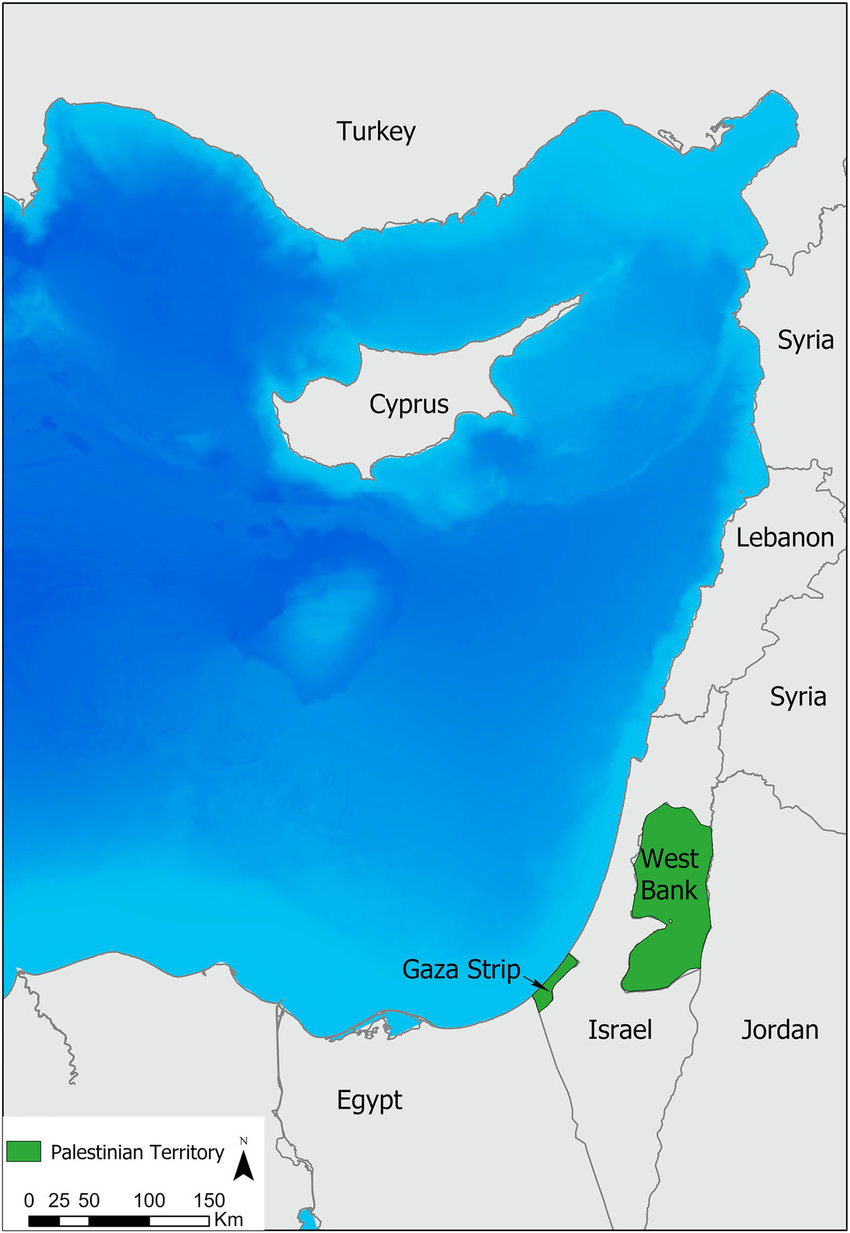
While bombs drop across Gaza, as the armchair experts exchange salvos and blame on social media, one basic fact seems to have been forgotten: Palestinians living in Gaza are humans just like everyone else. Together, they have their own culture, cuisine, and history that is also part of a larger Palestinian one. I want to take this moment to restore, in whatever small way that I can, the humanity of these people whose were already struggling -- but surviving -- before the recent events. This post will delve into the history, culture, and cuisine of the Palestinians who live in Gaza, with a particular focus to their ties to the Mediterranean Sea.

If we go back in time, Gaza was definitely a different place. Long before the first blockade, which Israel imposed after Hamas took control of the strip in 2006. Even before the Yom Kippur war of 1973.

Source: Research Gate

The Gaza strip is located on the southeastern edge of the Mediterranean Sea. There are forty (40) kilometers of coastline, which has a long historical connection with the sea. From 800 B.C.E. to 1,000 A.D., a thriving port known as Anthedon provided sea access to a succession of peoples, including Neo-Assyrian, Babylonian, Persian, Greek, Byzantine and eventually, Islamic empires (such as the Umayyad and Abbasid). During this time, the port played an important role in the incense trade and the silk route.  Goods such as spices, frankincense, myrrh, rare woods and precious stones made their way through the port.  The Anthedon Harbor is on a tentative list for designation as a UNESCO Heritage Site. 

While the Anthedon port continued into history under names, such as El-Blakiyeh, the strip continued to play an important role in connecting people with the sea, as well as promoting trade. Indeed, Gaza continued to serve as an important point in the spice trade until the 19th century. It served as the main port for goods being imported into southern Palestine, as well as Jordan and Iraq.

The Gazan coastline was not only important to international trade in the region, but also the local economy. Gazans have a long history and tradition of shipbuilding and fishing.  Workers would take their boats out to sea, drop their nets, wait patiently a few hours, and then pull up the nets to reveal the catch. At one point in time, that catch included  sardines, sea bass, mullet and various types of bream. The vessels would return with the catch, which would then make its way into the local market and on to the plates of Palestinian families.

Things changed after the Israeli government occupied Gaza in 1967. While a small port continued to exist in Gaza City, its role began to diminish and eventually end when Israel closed the port to international shipping. 

The Israeli government began to impose increasingly greater restrictions upon Gazan fishing boats. For comparison purposes, international law provides that the first twelve (12) nautical miles are territorial waters, with an additional twelve miles constituting a "contiguous zone" over which a country can exert certain authorities, which include fishing. Under the Oslo Accords of 1993, the area of territorial waters (and the contiguous zone) open to Gazans was limited to twenty (20) nautical miles. That area shrank to approximately twelve (12) nautical miles with the Bertini Commitment in 2005. Israel reduced the area open to Gazan vessels to six (6) nautical miles one year later. By 2009, the area open to Gazan fishing boats had been reduced to three (3) nautical miles, which is well short of where much of the fish swim. Israeli's navy enforced the restrictions, not only arresting workers on vessels that ventured too far out, but also shooting at them when at them for crossing the arbitrary lines that Israel drew in the sea. 

The lines changed again, with Israel widening them to fifteen (15) nautical miles in 2019, only to reduce it again one year later to eight (8) nautical miles a year later. The lines would change again and again at the whim of the Israeli government, usually in response to violence by terrorists, leaving Gazan fisheries uncertain about what their future held. Those uncertainties increased with Israel's initial blockade in 2006, which made fishing equipment and boat fuel harder to come by and more costly when found. The restrictions made it extremely difficult for Gazans to make a living off the seas, with an overwhelming number of fishermen living in poverty. 

Yet, there are still stories of how the Palestinians have persevered in the face of adversity. The Fishermen's Wives Seafood Kitchen provides one such example. Twenty wives of Gazan fisherman -- who call themselves Zawajat al-Sayyadin or "Fishermen's Wives" -- opened the kitchen to help their spouses. When the fishermen returned to port with their catch, the wives would prepare the seafood according to customers' orders. These orders include crispy fried fish, grilled fish, fish soups and fish pies. The prepared dishes could be sold for more than the fish. This effort followed a previous one that failed. But, the wives learned from the prior attempt, made changes, and found success, as well as support from a non-profit organization.

Some of the Fishermen's Wives preparing the catch. Source: Middle East Eye

For those Gazans who did not venture out into the dwindling areas where they could fish, they looked for other opportunities to continue their connection with the sea. One such opportunity involves a fish farm that is expected to raise sixty to eighty tons of sea bream each year. The farm was established with the assistance of the United Nations Food and Agricultural Organization and Italy. Palestinians have also established inland fish farms to raise tilapia. Both the sea bream and tilapia present opportunities to address needs within the Gaza strip, as well as potential "exports" to at least the West Bank, if not beyond (when allowed by the Israeli government). 

More importantly, these stories, and many others, provide insights into the Gazan people. Although told over the years, these voices are now silenced by the thunderous tones of war and weakened by the sharp propagandist attacks by each side's supporters.  The ultimate casualty are the innocent civilians who are caught in the cross-fire. They are first deprived of their humanity by outside forces, with the truly unfortunate being deprived of their lives. 

Martin Luther King, Jr. once said, "[o]ur lives begin to end the day we become silent about the things that matter." I have used this blog to protest the inhumanity of how people have been treated, such as Myanmar's treatment of the Rohingya or China's treatment of the Uyghurs. For me, this blog has evolved beyond just cooking food, but to learn about cultures and to gain a better understanding of other people and, most importantly, have a greater empathy for their lived experiences. 

So, I refuse to be silent in the face of so many people who appear to accept or ignore the dehumanization of everyday Palestinians. I will use my voice, through this blog, to recognize their lived experience (as briefly outlined in part, above) and to respect their culture and cuisine by preparing one of their traditional dishes (as set forth below).  

I have selected a dish that dish that represents the Palestinians' ties to the sea, namely, Zibdiyit Gambari (Spicy Shrimp and Tomato Stew). The dish calls for ingredients that are common in Gazan recipes, such as the use of dill, which has been referred to as part of the "Trinity of Gazan Cuisine," with the other parts of the trinity being seafood and resilience.  I also learned that Gazans have a love of spicy food, using chiles to bring a kick to many of their dishes. That is something that, as the more than a dozen dried and ground chiles in my pantry will attest, is something that I have in common with them. This particular dish was not too spicy, as I left out the seeds from the chiles. The end result was still a very delicious stew, that I served with some white rice and flat bread. 

ZIBDIYIT GAMBARI (SPICY SHRIMP AND TOMATO STEW)

Recipe from New York Times

Serves 4

Ingredients:

  • 2 tablespoons extra virgin olive oil
  • 1 medium red onion, finely chopped
  • 1 (14-ounce) can whole, peeled plum tomatoes, juices reserved
  • 1 teaspoon granulated sugar, plus more to taste
  • 3/4 teaspoon ground cumin
  • 1/2 teaspoon caraway seeds
  • 1/4 teaspoon ground allspice
  • Sea salt
  • Freshly ground black pepper
  • 1 to 2 jalapenos, finely chopped, plus more to taste
  • 3 garlic cloves, chopped
  • 2 tablespoons finely chopped fresh dill
  • 2 tablespoons sesame seeds
  • 1 pound raw medium shrimp, peeled and deveined, tails removed
  • Coarsely chopped parsley leaves, for serving

Directions:

1. Sauté the onion and garlic. Heat 2 tablespoons extra virgin olive oil in a large saucepan over medium heat. Add the onion and cook, stirring occasionally, until softened, about 10 minutes. Add tomatoes and their juices; 1 teaspoon sugar, the cumin, caraway seeds, allspice, 1/2 teaspoon each salt and pepper, and 1 cup of water to bring to a boil. 

2. Prepare the jalapeno, garlic and dill paste. Mash the jalapeno, garlic, dill and 1/2 teaspoon together using a mortar and pestle for a few minutes. Alternately, finely chop them together on a cutting board, then  mash them by pressing back and forth using the flat side of your knife until a paste forms. (Both approaches release the oil from the jalapeno and dill and make them more fragrant.) Add to the tomato sauce and stir to combine. Cover and simmer over low heat, stirring occasionally to break down the tomatoes, until the sauce is thickened and flavors meld, about 20 minutes. 

3. Toast the sesame seeds. in a small skillet, stir the sesame seeds over medium heat until golden brown, about 3 minutes. Transfer to a small bowl.

4. Cook the shrimp. When the tomato sauce is ready, taste and adjust the seasoning (you may want to add some more sugar or jalapeno). Finally stir in the shrimp, making sure that they are submerged, and cook over medium heat, stirring occasionally until they have all just turned pink and are cooked through, about 2 to 3 minutes. 

5. Finish the dish. To serve, drizzle with a generous amount of extra-virgin olive oil and scatter with the sesame seeds and chopped parsley.

*    *    *

I will have more to say in my efforts to protest against the dehumanization of the Palestinians who live in Gaza, as well as about the experiences of people around the world. Until then, lets pray for ...

PEACE.

Thursday, August 24, 2023

Watermelon Salsa

We had a lot of watermelon, which we had bought for our daughter's birthday party. I sliced the watermelon into kid-sized wedges. But, we had a lot of watermelon. And, when the party was over, we still had a lot of watermelon. 

Clare had been talking about making some watermelon salsa. I went onto the Internet and began looking at various recipes. Needless to say, there is a lot of commonality amongst those recipes. Besides the watermelon, most recipes called for red onion, jalapenos, lime juice, cilantro and salt.

I wanted to do something a little different. There were a few recipes that provided some ideas. Recipes that called for additional ingredients, such as cucumber and lime zest. I even thought about adding some mango, but I decided to leave that for another day and another recipe.

In the end, I took a recipe that I found on Master Class and made a couple of changes based on other recipes. I added that cucumber (1/2 of a cucumber, diced) and lime zest (about 1 tablespoon). I also made the salt optional, because I did not think it was required. Given all of the fresh ingredients, along with watermelon's natural tendency to leech water, I thought that it was good to go without the salt (which would have only drawn out more water from the ingredients).  

The end result is a colorful, fresh salsa that is actually very good. If I had a summer menu, this salsa would be part of it, along with a good gazpacho. 

WATERMELON SALSA

Recipe adapted from Master Class

Serves several

Ingredients:

  • 3 cups of seedless watermelon, diced
  • 1 small red onion, diced
  • 1/2 cucumber, seeded and diced
  • 1 jalapeno, seeds removed and diced
  • 2 tablespoons lime juice
  • 1 tablespoon lime zest
  • 1/3 cup cilantro leaves, chopped finely
  • Kosher salt, to taste (optional)
Directions:

Combine all of the ingredients together and mix well. Season with salt, if desired, just prior to serving.